
When equity becomes politically contested

Some projects confront questions of equity not because they cross borders, but because they cut straight through highly polarised debates. Sociologist Marta Bucholc examines how human rights are invoked and contested in Mozambique, Senegal, Poland, Ireland, Argentina and Honduras, where abortion is illegal, strongly restricted or deeply stigmatised. Even talking about it can be seen as a political act.
From the outset, Bucholc’s concern was not only how to protect participants, but how to prevent the project itself from being misinterpreted or misused. ‘Abortion is a divisive topic almost everywhere in the world,’ she notes, ‘and in countries where it is illegal, strongly restricted or deeply stigmatised, even having a conversation about it is often construed as a political declaration.’ She wanted her project Abortion Figurations, based at the University of Warsaw, to be ‘a study of human rights in abortion debates and not an exercise in clandestine persuasion.’ This was her way of preserving research integrity against anticipated political pressure, while also recognising strong calls for more engaged scholarship in this area.
Designing the project also meant preparing the team for the emotional and ethical weight of talking to people with very diverse, sometimes radical, views on abortion and human rights. Bucholc saw this as ‘a potential mental and emotional burden’ and decided to invest in psychological training for team members conducting qualitative fieldwork. All of them took part. ‘We all found it very helpful,’ she says, to maintain both necessary distance and trust in interviews that could be intensely personal and politically charged.
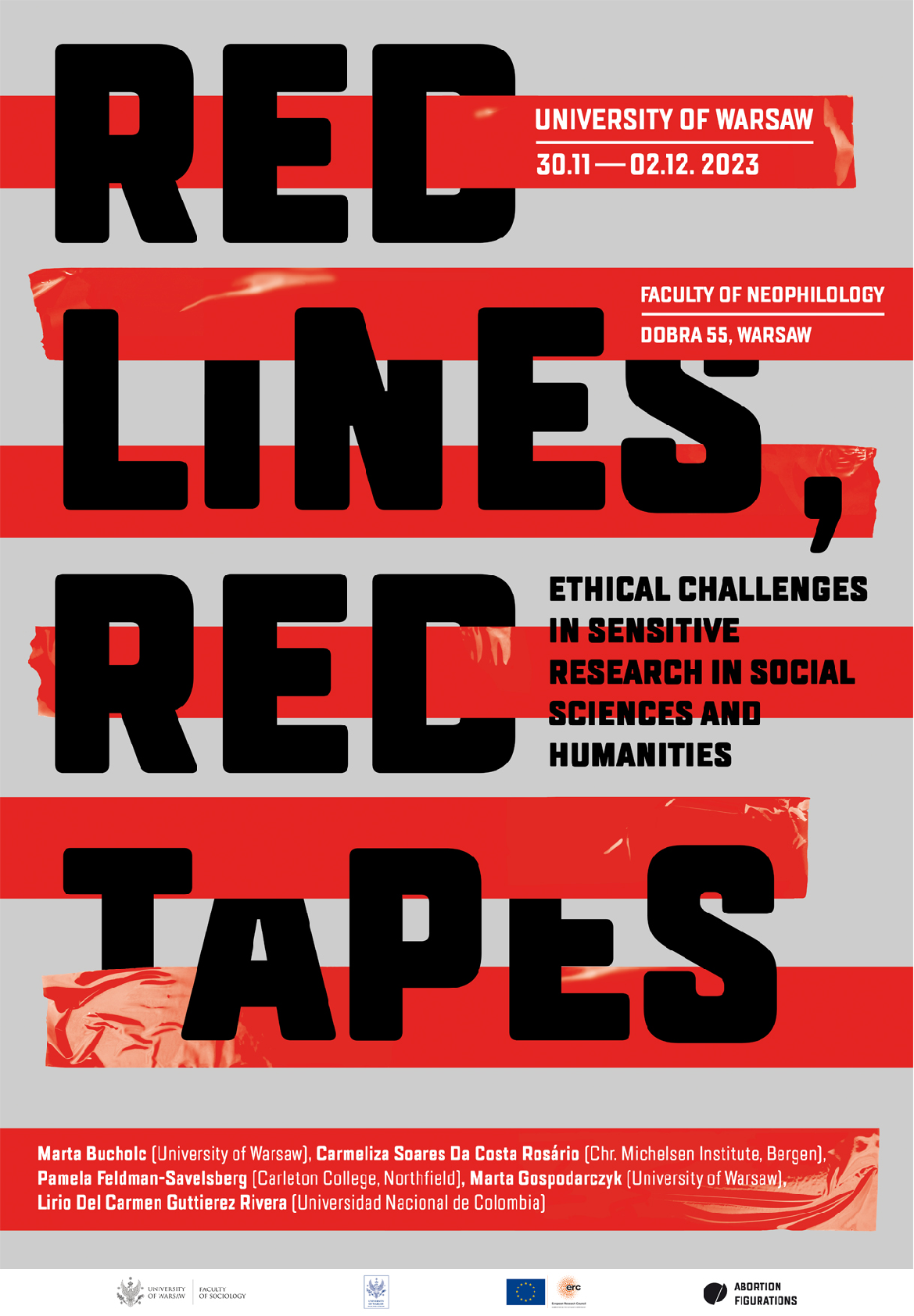
Many of the deeper ethical reflections, however, came later, after the grant was awarded. They emerged in dialogue with the project’s Ethics Advisory Board, with ERC ethics experts, with ethics bodies in the field countries, and with the ERC Ethics Officers. Looking back, Bucholc sees this as ‘an ongoing dialogical shaping of the ethical design of Abortion Figurations’, rather than a one‑off approval at the start. It has been rich enough to inspire a dedicated conference on research ethics, tellingly titled Red Lines, Red Tapes.
Working with such a polarised topic also forced Bucholc to reflect on her own position. She approached abortion and human rights as ‘an academic with no activist background’ and wanted to keep that stance, even as colleagues and interlocutors around her sometimes moved in more overtly activist directions. Within the team, there is pluralism in how academic ethos and public engagement are understood. ‘We constantly debate the impact of these differences on our work, individually and as a team,’ she says. To foster ‘harmonious and productive teamwork by a group of diverse persons coming from different disciplinary, linguistic, cultural, and political backgrounds,’ she undertook a long series of coaching sessions on academic leadership, which she found ‘most useful.’
Who decides what counts as a ‘benefit’?
The concept of benefit‑sharing, which often seems straightforward in other fields, turned out to be particularly knotty in this project. Bucholc is candid about the difficulty. For two parties to ‘share a benefit’, she suggests, they must at least roughly agree that something is indeed beneficial. Yet in some of the societies her team studies, ‘majorities do not agree that it is beneficial to have more knowledge about, say, how access to legal abortion can be supported by human rights arguments – indeed, they might find it harmful.’ This raises a disconcerting question: should she adapt to that definition of benefit, and if so, how far, without compromising her own integrity as a researcher?
A second issue is that Abortion Figurations does not produce obvious material benefits. ‘We have few benefits to share beyond knowledge, research skills and experience,’ she notes. But what if that knowledge is not wanted or is actively rejected? Conversely, what if actors whose views and actions the researchers perceive as discriminatory or harmful were keen to draw on their skills? ‘Should we still share them and abet what they do?’ These are not abstract puzzles for ethics seminars. In a project like this, Bucholc stresses, they must be decided daily, case by case.
In practice, the team opted ‘to share with those who are willing to receive and with whom we are operating a similar definition of a benefit’: collaborating institutions and individuals in fieldwork countries, and their constituencies. Beyond sharing findings and reporting on their work, the project strives to make it possible for partners to join the team in Warsaw for extended stays, to take part in collaborative analysis of data and to co‑author publications. Without in‑person cooperation, Bucholc argues, ‘it is very difficult to achieve a real peer‑to‑peer intellectual exchange that we are after.’
The team also responds to specific requests by offering training and workshops in methods and skills that partners or their students want to develop. In each case, the aim is to build collaborations that will survive beyond the project and to seek new funding opportunities together. These forms of benefit‑sharing ‘do not sound very adventurous at all,’ she admits – they are an extension of day‑to‑day academic work. But for partners facing political instability, deep polarisation and threats of backlash against human‑rights achievements, being part of a community and ‘experiencing support of like‑minded academics in daily collaboration is a very important moral resource.’
Everyday ethical tensions in polarised research
So far, Abortion Figurations has not faced open public backlash, and has enjoyed stable support from its academic environment in Warsaw. But Bucholc is acutely aware that many colleagues working on similarly sensitive topics have been less fortunate. Their experiences shaped her ‘horizon of expectations’ and a constant stream of small decisions: ‘What to publish on our social media? Which position to support? How to phrase our statements?’ These questions became particularly concrete in choosing subjects and framing for the project’s video blog.
More prosaic fieldwork situations have also left their mark on her ethical thinking. One such experience is familiar to any qualitative researcher: refusal or withdrawal by potential participants. In Abortion Figurations, she encountered refusals that were not due to scheduling, health or lack of interest, but to ‘express moral opposition against the project’s perceived objectives.’ Responding to these concerns led her to recognise ‘the moral compromises and dilemmas that may sometimes be entailed by the very act of talking to me,’ beyond the usual questions of trust and security. For some people, agreeing to an interview can itself feel like endorsing or legitimising the project, which complicates what it means to ask for their time and stories.
On the protection side, standards for safeguarding participants were set ‘very high from day one’, following ERC ethics guidance and the requirements of ethics bodies in all six fieldwork countries. One practical layer of protection is linguistic: publications and public presentations based on interview data are usually not in the languages of the original interviews, which helps reduce the risk of singling out individuals or small groups. Preparing the project’s interview archive for an open repository, however, has shown how demanding it is to turn even a carefully drafted data‑management plan into reality when sensitive material from several countries and legal systems is involved.
Learning ethics from other people’s “messy” experiences
Asked what advice she would give to other ERC grantees working on polarising issues that touch on human rights, law and intimate life, Bucholc does not point first to handbooks or codes. Instead, she recommends ‘going beyond guidelines, standards and textbooks’ and seeking exchanges with people who have conducted similar research. Often, she suggests, it is the idiosyncratic, singular, hard‑to‑describe experiences – the ones that never make it into formal publications or lectures – that matter most for ethical reflection.
For Abortion Figurations, the project’s Ethics Advisory Board has been the first port of call for such exchanges. Having ‘three excellent researchers at our side, ’Bucholc says, has allowed the team to confront ethical difficulties as they arise, rather than trying to anticipate everything in advance. In that sense, the project’s ethics is not a finished design, but an evolving conversation shaped by the realities of working on abortion in a world where the subject itself is a political battleground.
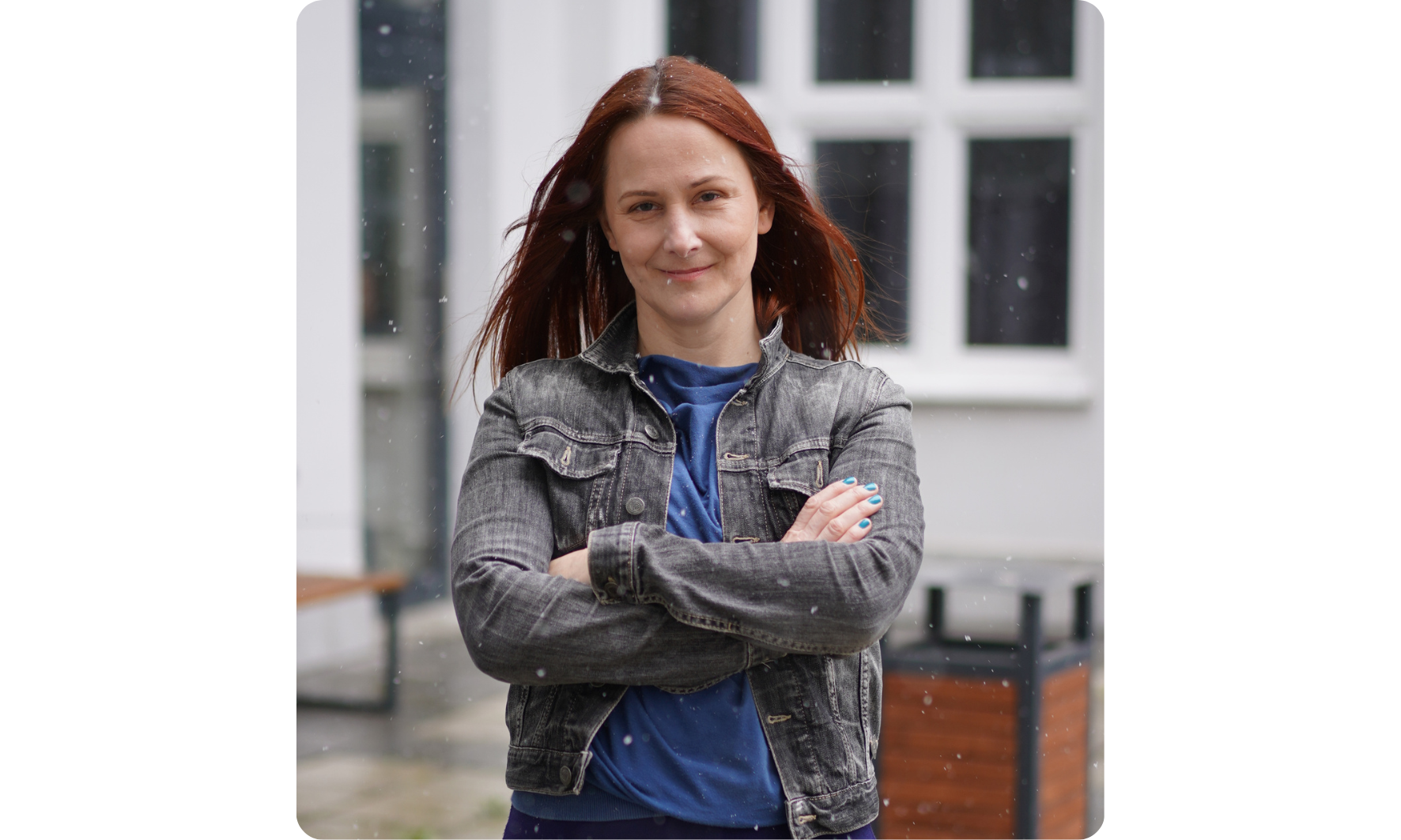
Marta Bucholc is Professor of Sociology at the University of Warsaw and a Permanent Fellow at the Institute for Human Sciences (IWM) in Vienna. She leads the ERC Consolidator Grant project Abortion Figurations, examining how human rights are invoked in abortion debates across six countries.