Advanced Grants 2025: Examples of projects

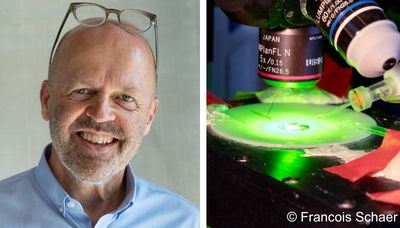 Drug addiction is a devastating challenge for society, yet individual vulnerability and resilience to it remain poorly understood.
Not everyone who uses drugs like cocaine, which is among the most highly addictive substances, becomes addicted. In fact, only 20% of human cocaine users develop addiction, a pattern that also appears in mice, which raises the question: why are some people more vulnerable than others? The answer may lie not just in our genes or our environment, but in how the two interact to change the functioning of the brain’s circuits.
Christian Lüscher and his team at the Spanish National Research Council (CSIC) are investigating the puzzle of addiction by studying genetically identical mice, focusing on neuroepigenetic mechanisms, chemical "switches" in the brain that don’t change the DNA but alter how genes work. These mechanisms can shape behaviour through life experiences, whether negative ones such as stress or positive ones. Their work centres on identifying the factors that tip the balance between vulnerability and resilience.
The team will first identify behavioural and brain markers that predict which animals are at risk of compulsive drug use. Then, they will test how stress pushes them towards addiction and whether positive environmental influences can reverse these changes. Finally, they will explore ways to erase harmful epigenetic modifications, effectively resetting the brain to reduce vulnerability and restore resilience.
By uncovering behavioural and molecular vulnerability biomarkers in mice, this research aims to develop personalised patient approaches for humans, tailored to the individual’s biology and life history, ultimately enabling precision medicine in the field of addiction.
Christian Lüscher is a neurobiologist and neurologist, professor at the University of Geneva and attending physician at Geneva University Hospital.
Project information:
- Researcher: Christian Lüscher
- Project: Vulnerability and resilience in addiction: Integrating epigenetics, synapses, circuits, and behavioral trajectories (VARIANT)
- Host Institution: Spanish National Research Council (ES)
- ERC funding: €2.8 million over 5 years
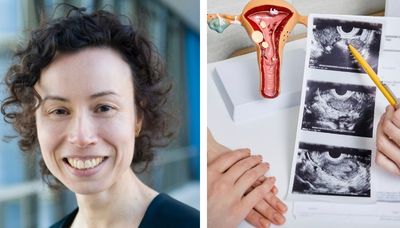 Ovaries begin to age in the mid-30s, long before menopause. This natural decline not only affects fertility but also raises the risk of conditions like osteoporosis, cardiovascular disease, and Alzheimer’s disease. Unlike other organs, the ovary ages irreversibly, with its finite supply of eggs dwindling over time. But what if we could slow this process?
Susana Chuva de Sousa Lopes and her team at Leiden University Medical Center are exploring innovative ways to delay ovarian ageing by preserving egg reserves and improving blood vessel support. First, they’ll create a detailed 'map' of how blood vessels, nerves and metabolism in the ovary change with age. Using 3D imaging and metabolic tracking to understand how ovaries use energy, they’ll pinpoint where and why follicles (the structures that hold eggs) start to fail.
The team will then test two promising strategies: natural compounds (found in gut bacteria and some foods) that may prevent premature egg activation, and a stem cell-based therapy using blood vessel-supporting cells to improve blood flow to ageing follicles, potentially improving egg quality.
If successful, this research could lead to clinically feasible interventions to extend fertility, delay menopause, and reduce age-related diseases. For women, this could mean more control over their reproductive and long-term health, and a higher quality of life as they age.
Susana Chuva de Sousa Lopes is a Professor of Developmental Biology in the Department of Anatomy and Embryology at the Leiden University Medical Center.
Project information:
- Researcher: Susana Chuva de Sousa Lopes
- Project: Extending female reproductive longevity: Neurovascular control of the ovarian reserve (dOvary)
- Host Institution: Leiden University Medical Center (NL)
- ERC funding: €2.5 million over 5 years
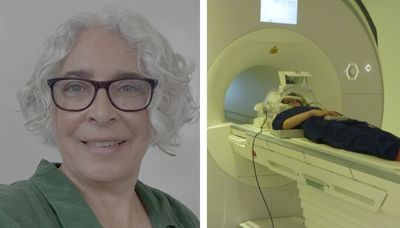 Stuttering is a common neurodevelopmental condition affecting up to 8% of children, of whom one in five continue to stutter into adulthood. Stuttering is characterised by speech disrupted by repetitions and prolongations of speech sounds, hesitations, and blocks. For these individuals, disrupted communication can affect mental health, restrict academic achievement, reduce employment opportunities, and impact quality of life.
Despite decades of research, the neural mechanisms responsible for the persistence and recovery of stuttering remain poorly understood, and effective support for adults remains limited.
Kate Watkins and her team will investigate why stuttering starts, why it stops, and why it sometimes stays, and will further explore innovative therapies to reduce stuttering.
The project will investigate the neural patterns of persistence and recovery in children, test a novel brain stimulation therapy to improve speech fluency, and define the neurophysiological mechanisms responsible for speech timing and auditory motor integration in adults.
It is the first project to link data from children and adults, and multimodal brain scans with behaviour, by using methods rarely combined, such as brain microstructure, neurochemistry, electrophysiology and neuromodulation. The findings will connect to broader principles of speech motor control and timing, with implications for other related disorders like aphasia and Parkinson’s.
Beyond its academic contributions, the project also carries societal benefits by increasing public awareness of this enigmatic condition and better supporting individuals who stutter.
Kate Watkins is Professor of Cognitive Neuroscience at the University of Oxford and a Fellow of St Anne’s College. Her research investigates the brain processes involved in speech, language and development.
Project information:
- Researcher: Kate Watkins
- Project: Brain mechanisms of stuttering: Why it starts, stops, and sometime stays (STUTTER)
Host Institution: University of Oxford (UK) - ERC funding: €2.5 million over 5 years
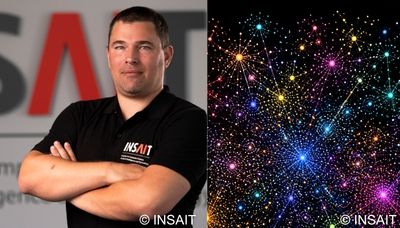 Imagine an everyday situation: a delay at an underground station triggers a cascade of problems throughout the network, with workers arriving late, missed connections, and overcrowded platforms. Managing and resolving these effects in real-time requires algorithms capable of handling an enormous complexity of information at high speed, solving problems in parallel.
Bernhard Häupler and his team at INSAIT will develop new mathematical and algorithmic tools to make network optimisation algorithms scalable, overcoming the barriers that currently limit their ability to respond efficiently.
From the internet to supply chains, almost everything underpinning modern societies can be understood as a large network of nodes and connections. As these networks grow in complexity, optimising their functioning becomes one of the major computational challenges of our time. Despite advances in parallel computing, current algorithms still encounter significant barriers when faced with the magnitude of larger and more complex networks.
By applying these algorithms to real networks, Professor Häupler’s research will aim to optimise routes, minimise delays, or decongest connections. But the potential impact goes beyond these examples. The new tools, methodologies, and innovations proposed by Häupler's team could transform the way we manage any integrated system in a network, overcoming current scalability barriers.
Bernhard Häupler is currently based at the Institute for Computer Science, Artificial Intelligence and Technology (INSAIT) of Sofia University in Bulgaria. His research contributes to a wide variety of areas, including algorithm design, distributed computing, and coding theory. Before joining INSAIT, an ERC Starting Grant supported him to return from a faculty position in the United States to Europe and lead a research group at ETH Zurich. Prof. Häupler is proudly neurodiverse and thankful to the ERC for enabling him to do cutting-edge research in a way suitable to his brain.
Project information:
- Researcher: Bernhard Häupler
- Project: Fully scalable network optimization (FullScaleOPT)
- Host Institution: INSAIT, Sofia University (BG)
- ERC funding: €2.5 million over 5 years
 Why can a magnet suddenly stop working? How can tiny invisible interactions between particles trigger dramatic changes in the world around us? From matter abruptly switching state to complex systems behaving unexpectedly, these phenomena are everywhere in nature. Yet scientists still do not fully understand the hidden rules behind them.
Hugo Duminil-Copin, awarded the 2022 Fields Medal for his groundbreaking research in statistical physics, wants to uncover these hidden mechanisms. His ERC-funded project will tackle some of the hardest open questions in physics by developing new tools to better comprehend complex systems, from magnets and quantum materials to high-dimensional models.
Many of these phenomena are first studied through physical intuition: scientists observe patterns, transitions or behaviours that seem to appear suddenly, without always fully grasping why. A central challenge is to transform these intuitions into rigorous proofs and theorems. Duminil-Copin’s work bridges this gap, translating abstract ideas from physics into a precise mathematical language that can explain, predict and generalise complex behaviour.
The research will combine ideas from probability, physics and analysis to reveal how large-scale behaviour can emerge from countless microscopic interactions. Beyond advancing fundamental science, the project could open new ways of understanding complex systems across mathematics and physics.
Hugo Duminil-Copin is Professor of Mathematics at the University of Geneva. His research focuses on probability theory and statistical physics, exploring how complex systems behave at critical points and phase transitions.
Project information:
- Researcher: Hugo Duminil-Copin
- Project: Statistical Physics through Random Paths and Random Functions (SPRaPAF)
- Host Institution: University of Geneva (CH)
- ERC funding: €2.5 million over 5 years