
Bots, amplification and system-wide effects

Milena Tsvetkova studies how humans and intelligent machines interact in digital spaces. Her work moves past isolated cases to explore how interventions, bots, and algorithms affect entire networks, impacting democracy and daily interaction.
‘Algorithms gatekeep, mediate, and manipulate our social interactions and political information, and people should be deeply concerned about this,’ she says. ‘Besides mediators, algorithms can also be social actors – I am talking about bots. Bots on social media are automated users who pretend to be humans but act in a coordinated way to spread spam, harass, and exploit. These artificial agents prey on human weaknesses and amplify disagreement, generate conflict, and spread misinformation. With the recent advances in Large Language Models, the problem is becoming only worse. The proliferation of bots and AI-generated content threatens to undermine the value of online communication and public discourse entirely.’
Her ERC-funded research shows that people react differently when they know they are dealing with a bot. Even well-intentioned automation can backfire. A compliment from a human feels motivating; the exact words from an obvious bot can come across as patronising or empty. ‘Similarly,’ she argues, ‘information perceived as relevant and trustworthy from a friend may be treated with suspicion when it clearly comes from an automated account. Once the source is revealed, influence can completely flip.’
HUMANET: humans and machines as one system
Tsvetkova’s ERC Consolidator Grant project HUMANET investigates how human-machine, machine-machine, and human-human interactions form a complex adaptive social system and shape collective outcomes. It integrates sociology, social psychology, human-computer interaction, and web science.
HUMANET uses virtual lab experiments, agent-based models, digital-trace data, online field studies, and comparative analyses across communities. The team studies various online human-bot environments, such as collaboration, discussion, and crowdfunding platforms. This method-mix captures both controlled causes and patterns ‘in the wild’.
Mapping feedback loops and incentives
Across these settings, the project traces feedback loops: how the behaviour of bots shapes human responses, how those responses change what algorithms optimise for, and how platform design and business incentives feed back into both. Tsvetkova highlights one particularly problematic incentive structure: automated accounts and AI-generated content inflate the activity metrics that platforms proudly report to investors. More bots and synthetic engagement can mean better-looking numbers, even if the underlying discourse becomes more toxic or hollow.
HUMANET expands empirical knowledge of human-machine systems, generates testable theories of human-bot interaction and network effects, and advances methods for modelling and experimenting with artificial agents. Ultimately, it seeks to lay the foundations for a cumulative empirical sociology of humans and machines and to bring public and policy attention to the growing ‘algorithmisation’ of daily life.

Regulation, Reddit, and future directions
Tsvetkova sees Digital Services Act (DSA)-style interventions as one way to counter perverse incentives by requiring platforms to identify or remove automated accounts and fake content and to be more open about how their systems work. Such interventions can strengthen transparency and trust without banning automation altogether, she says.
Her next focus uses Reddit as a natural experiment in community-driven bot governance. By tracking collaborative labelling, norms, and API restrictions, her team aims to identify strategies that help distinguish beneficial from harmful automation and design interventions that work at scale.
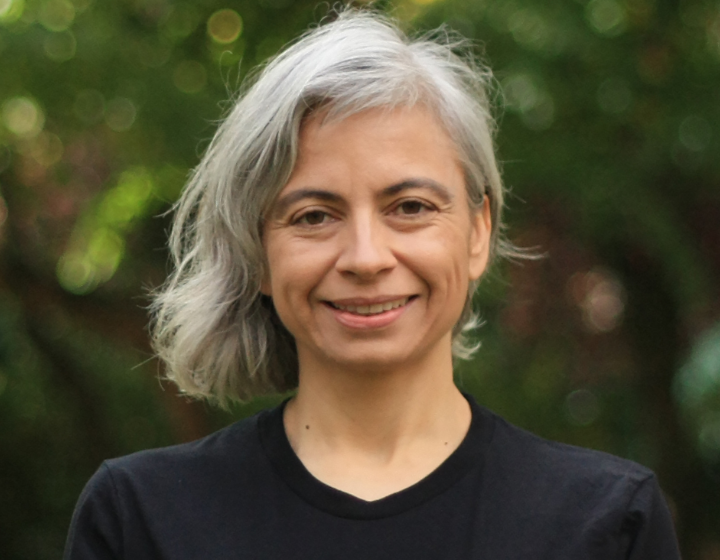
Milena Tsvetkova is an Associate Professor of Computational Social Sciences in the Department of Methodology at the London School of Economics and Political Science (LSE).