Consolidator Grants 2025: Examples of projects

Improving early sepsis diagnosis
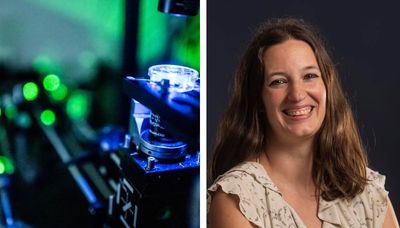
Affecting around 50 million people every year, sepsis is a life-threatening reaction to infection and remains a leading cause of death in Europe. Early detection is vital, yet the first signs of sepsis are often non-specific and can vary greatly between individuals. While diagnosis may be improved by measuring free radicals produced by certain white blood cells (neutrophils and monocytes), such molecules are difficult to study due to their high reactivity and low concentration.
To address the urgent need for improved sepsis detection, Romana Schirhagl will develop a technique to assess the free radical load in cells as a new diagnostic marker for sepsis, using patient samples and a mouse model. Her method leverages nanodiamond-based quantum sensing, a purely optical technique that will help investigate when and where free radicals are generated in neutrophils and monocytes as well as identify those few radicals that play a role in sepsis. She will also design a new fiber-based system intended to enable measurements within the bloodstream. Not only does this instrument promise to provide fundamental diagnostic insights, but it could also be refined to monitor sepsis progression in intensive-care patients.
Romana Schirhagl is a professor at the Department of Biomaterials and Biotechnology at the University Medical Center Groningen in the Netherlands, with specialised expertise in applying diamond magnetometry to biomedicine. Her previous research in biophysics and cell biology has been recognised with an ERC Starting Grant in 2016 and a Proof of Concept Grant in 2022.
- Researcher: Romana Schirhagl
- Project: Quantum sensing for early sepsis detection - FORSEE
- Host Institution: Academisch Ziekenhuis Groningen (Netherlands)
- ERC grant: €2 million for 5 years
Nanoparticles to fight cancer
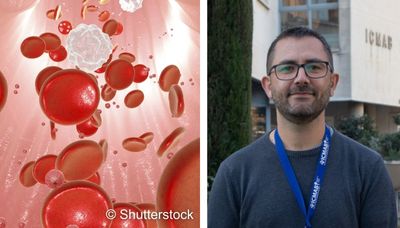 Tumours contain a network of small, immature, disorganised blood vessels with complex dynamics. These microvessels accelerate tumour growth and facilitate metastasis and often hinder the effectiveness of treatment.
Until now, the challenge has been to understand how blood and cells move through these tiny complex vessels inside tumours.
Juan Pellico Sáez aims to overcome this challenge through positron emission particle tracking (PEPT) that tracks a single particle marked with a positron emitter in real time and in 3D. This capability has not yet been exploited in the biomedical field.
Dr Pellico Sáez will seek to design nanoparticles that circulate long in the body and selectively bind to tumour cells. Once radiolabelled with high activity, these particles can be quantified, isolated and tracked accurately. He will also test the technique in mouse models of fibrosarcoma, a type of cancer.
This research may contribute to new knowledge about the study of cancer progression, metastasis, and accurate tumour diagnosis. It could also open up new possibilities in nanomedicine, image-guided therapy, and molecular imaging, which would improve cancer diagnosis and treatment using precision medicine.
Juan Pellico Saez is a Ramón y Cajal researcher at the Institut de Ciència de Materials de Barcelona. He holds a PhD in Chemistry and pursued postdoctoral research at the Advanced Imaging Unit of the Spanish Centre for Cardiovascular Research (CNIC). He has also worked as a Postdoctoral Research Associate at the University of Oxford and as a Senior Researcher at King’s College London.
- Researcher: Juan Pellico Saez
- Project: In vivo imaging of blood flow dynamics and cell migration in tumour microvasculature via real-time single nanoparticle tracking with positrons - NanoFLOW
- Host Institution: Agencia Estatal Consejo Superior De Investigaciones Cientificas (CSIC) (Spain)
- ERC grant: €2 million for 5 years
Advancing mental health interventions for children
 Children exposed to humanitarian crises around the world often face traumatic events, such as violence, abuse, displacement, poverty and natural disasters. Living through such events puts them at far greater risk of emotional distress and, for many, lasting trauma. Research shows that mental health and psychosocial support interventions that are put in place for them are only partially effective, with a risk of increasing psychological symptoms for some children. However, we currently don’t have the scientific tools to predict the responses of children based on their individual differences.
Against this background, Marianna Purgato will develop a precision psychological care algorithm to reliably predict a child’s response to mental health and psychosocial support interventions. Starting from an individual participant data network meta-analysis, she will create models that anticipate responses to interventions based on person-level differences. The dataset will be transferred into a machine learning algorithm, able to foresee how, under what set of circumstances, and for which child a specific intervention is effective in reducing symptoms of post-traumatic stress and improving functioning and wellbeing. She will test the algorithm in a randomised controlled trial that draws on individual patient characteristics, an approach not previously used in mental health.
Marianna Purgato is an associate professor of Applied Medical Technology and Methodology at the Department of Neurosciences, Biomedicine, and Movement Sciences of the University of Verona in Italy. Her research will open a new era for the delivery of mental health and psychosocial support interventions to traumatised children, by abandoning the “one-size-fits-all” approach.
- Researcher: Marianna Purgato
- Project: Precision Evidence-based psychological Aid for Children in Emergency - PEACE
- Host Institution: University of Verona (Italy)
- ERC grant: €1.8 million for 5 years
Turning proteins into powerful molecular motors
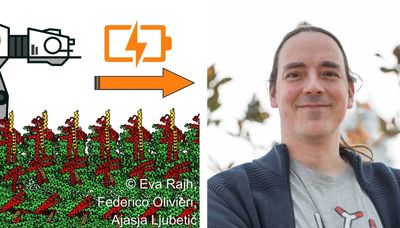 Proteins act like tiny machines inside our cells that make life possible. They copy DNA, reshape cell membranes, and move important molecules to where they’re needed. Natural protein motors have evolved to work inside cells, but they aren’t optimized for many new applications scientists envision. Designing and building similar protein machines from the ground up could one day transform medicine and materials science. However, creating these complex systems artificially remains a major scientific challenge.
Dr. Ajasja Ljubetič aims to tackle the challenge by creating the first fully artificial, powered protein motor, that is designed from scratch and not copied from nature. These tiny motors will travel along specially engineered protein tracks. The proteins will be designed using advanced AI tools and their movement studied using sensitive single-molecule measurements. The proteins will be propelled by a Brownian ratchet principle, where random motion is converted into purposeful, one-directional movement using an energy source and the asymmetry of the track.
Artificially designed protein machines are more stable and easier to control than natural ones, paving the way for advances in bionanotechnology that could eventually enable synthetic cellular systems, highly targeted medical treatments, and even programmable nanorobots.
Dr Ajasja Ljubetič is a research assistant professor at the Department for synthetic biology and immunology at the National Institute of Chemistry in Ljubljana in Slovenia, where he is building dynamic designed proteins. In 30 years, he would like to live in a world where designed protein robots are as common as cell phones.
- Researcher: Ajasja Ljubetič
- Project: Protein Rigid Organization for Powered Engineered Locomotion - PROPEL
- Host Institution: Kemijski Institut, Slovenia
- ERC grant: €2 million for 5 years
The decline of the Late Roman Empire in its provinces
 The Late Roman Empire, covering the period from 284 to 641 AD, faced numerous challenges that ultimately led to its partial disintegration in the 7th century. Alongside continuous incursions by nomadic groups and the long-running conflict with the Persian Empire, the state’s administrative capacities were increasingly strained between the 5th and 7th centuries. Across the provinces, governors and other officials found it ever harder to exercise the powers granted to them by the emperors. This phenomenon stemmed from the rise of a new, powerful, military and civil aristocracy that differed markedly from the elites of the earlier centuries of the Roman Empire.
Drawing on written and archaeological sources, Maria Nowak will offer new insights into how the Late Roman Empire functioned on its peripheries. She will examine provincial governance, the effectiveness of communication between the imperial court in Constantinople and the provincial capitals, and how laws were actually enforced in distant regions. The period under investigation is characterised by significant shifts in power, which inevitably impacted the government of the provinces and the authority of the emperors themselves.
Her research focuses on three exceptionally well-documented provincial capitals -Antinoopolis, Ravenna and Petra - but encompasses similar cities across the Mediterranean. Through this comparative approach, the project aims to build a comprehensive model of the administration of justice and enforcement of law in the Late Roman Empire, thereby contributing to a broader picture of state institutions in the Roman antiquity.
Maria Nowak is based at the Polish Centre of Mediterranean Archaeology of the University of Warsaw. Her research interests span from Legal history and Roman law to Papyrology and Graeco-Roman Egypt.
- Researcher: Maria Nowak
- Project: A provincial capital polis at the end of the Roman era. Periphery or a center of power? - PeriPolis
- Host Institution: University of Warsaw, Polish Centre of Mediterranean Archaeology (Poland)
- ERC grant: €2 million for 5 years