Iron Age massacre targeted women and children, new research reveals

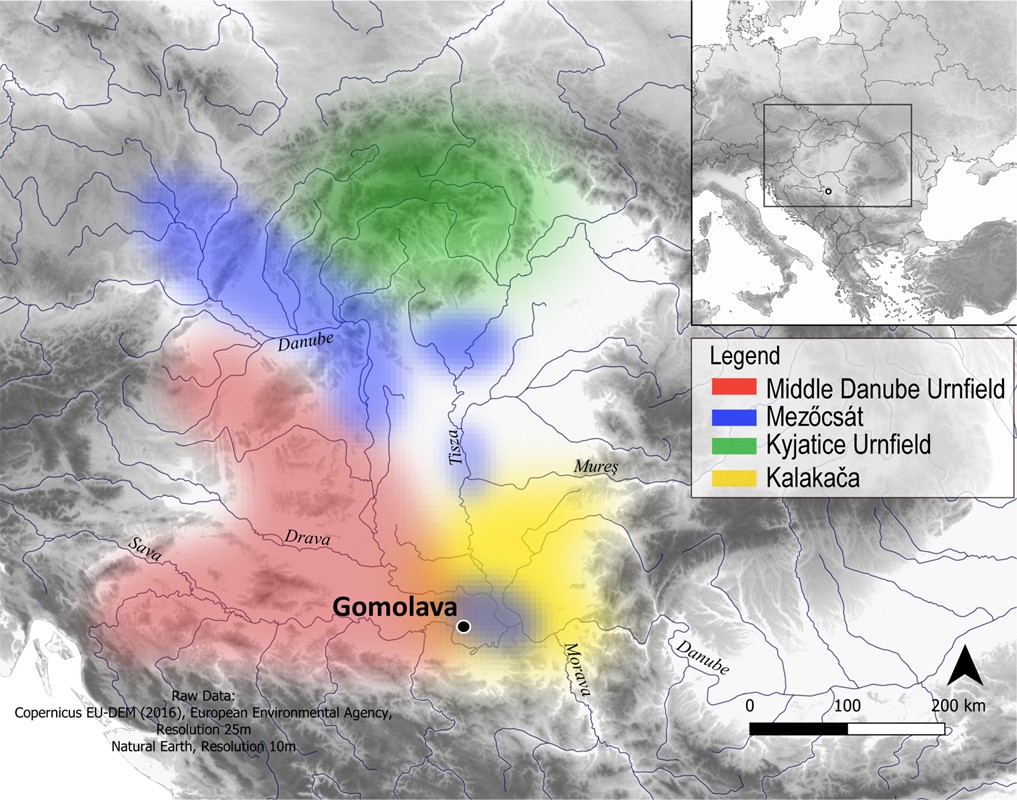
Archaeological investigations at the Gomolava burial sites in northern Serbia, funded by the European Research Council, uncovered a grave containing the remains of more than 77 individuals, most of them women and children.
Buried together around 2,800 years ago, the victims suffered violent deaths, including bludgeoning and stabbing, in what researchers say was a planned act of large-scale violence.
'When we encounter mass graves from prehistory with this kind of demographic, we might expect they were families from a village that was attacked,' said co-lead Associate Professor Barry Molloy, UCD School of Archaeology and ERC grantee.
'Gomolava genuinely took us by surprise when our genetic analysis showed the majority of people studied were not only unrelated, not even their great–great-grandparents were. This was highly unusual for a prehistoric mass grave and not what we expect to find if they had all lived together in a village.'
Using a range of analyses, it was shown that as with the adults, most of the children found were also female.
This, and the killing of younger age groups that may be taken away as slaves, suggests this was more than a simple ambush and that targeting these people was meant to send a grisly message to their wider community, the researchers argue.
The findings, published in Nature Human Behaviour, provide fresh understanding to Iron Age conflict and sheds new light on how mass violence was used to assert power in prehistoric Europe.
Of the victims, 40 were children between the ages of one and twelve, 11 were adolescents, and 24 were adults – 87% of whom were female. The only infant discovered in the grave was male.
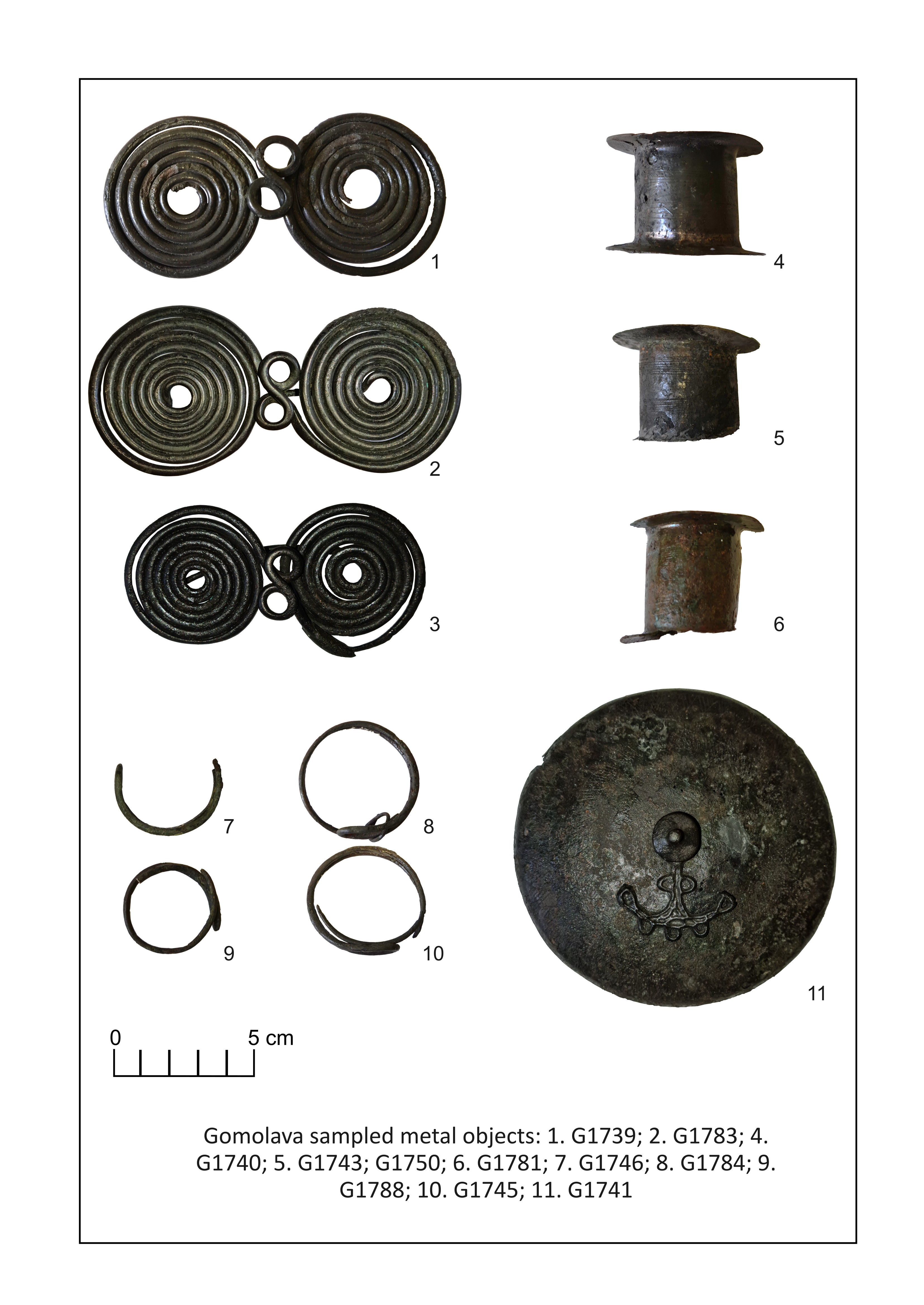
Unlike other mass burials of the period, the Gomolava site shows evidence of careful preparation with victims buried alongside personal possessions, including bronze jewellery and ceramic drinking vessels.
'It is typical in prehistoric mass graves for victims to be hastily buried together in a pit, maybe by survivors or even their killers. The victims at Gomolava were hastily buried in a disused semi-subterranean house, but uniquely, not only had the bodies not been looted of their valuables, offerings were made in what must have been a respectful ritual,' said Associate Professor Molloy.
Animal remains, such as a butchered calf, were also interred with them, while broken grain-grinding stones and burnt seeds were placed on top of the grave.
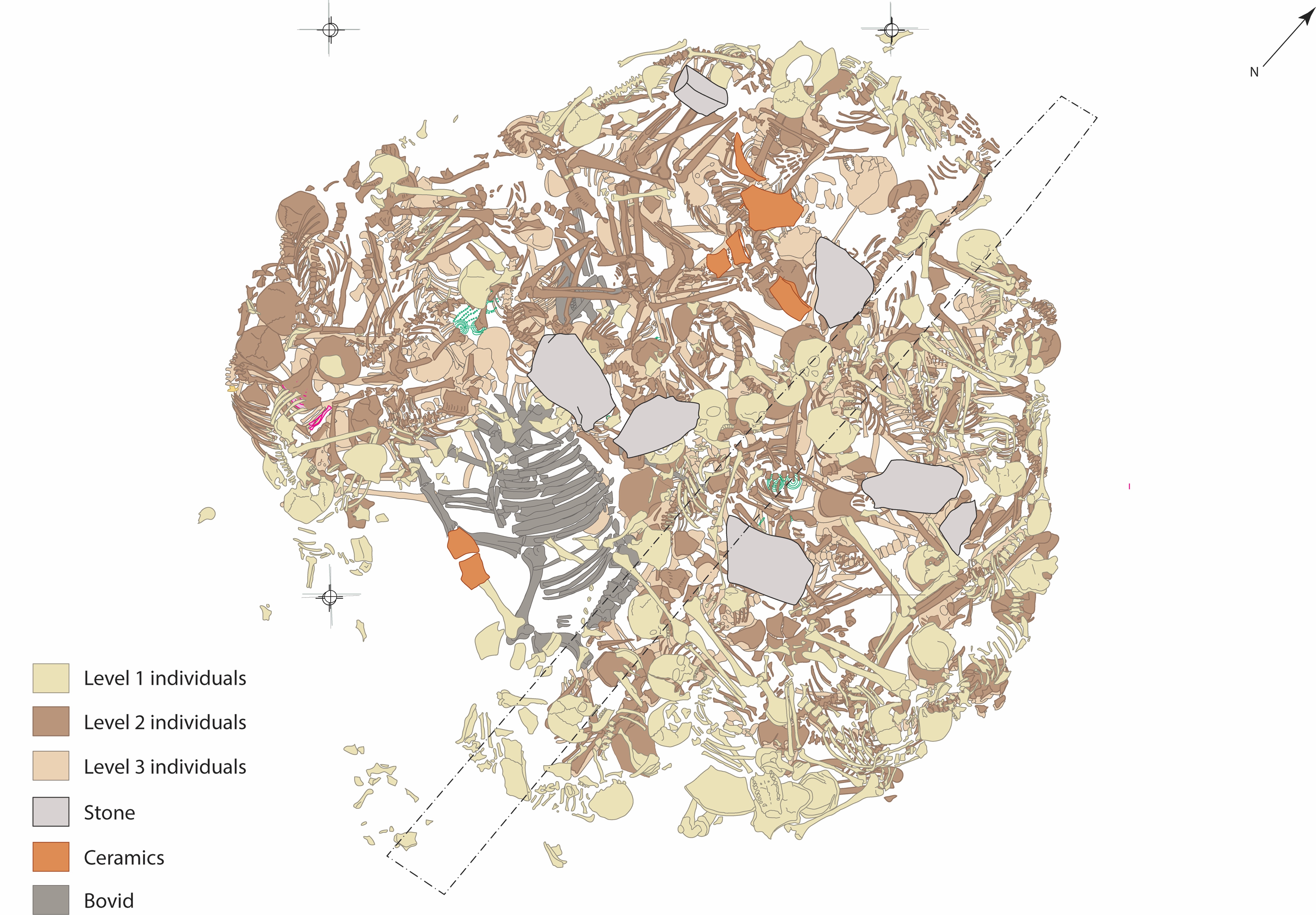
Such an investment of time and resources suggest the killings were followed by a deliberate and symbolic burial ceremony rather than a hurried attempt to dispose of the dead.
'The brutal killings and subsequent commemoration of the event can both be read as a powerful bid to balance power relations and assert dominance over land and resources,' said co-lead Dr Linda Fibiger, University of Edinburgh’s School of History, Classics and Archaeology.
Genetic testing showed the victims were not closely related, while isotopic data from teeth and bones showed diverse childhood diets pointing to the possibility that the women and children were from different settlements and were likely captured or forcibly displaced before being killed.
Researchers believe the mass-killing took place at an unsettled time when communities in the Carpathian Basin were establishing enclosed settlements and reoccupying Bronze Age settlement mounds and parts of mega-forts.
Building these forts and the claims they must have made on the land around them may have sparked conflict with other groups disputing territorial boundaries or potentially mobile pastoralists who sought to continue exploiting those same lands seasonally, they argue.
'Our team has been tracing the Bronze Age collapse and its aftermath in Europe. What we found at Gomolava tells us that as things recovered in this area moving into the Iron Age, reasserting control over landscapes could include widespread and extremely violent episodes between competing groups,' added Associate Professor Molloy.
This study was carried out by an international team co-led by University College Dublin, University of Edinburgh, the University of Copenhagen, and the Museum of Vojvodina, with contributions from institutions across Europe.