Six new members of the ERC Scientific Council and three new Vice Presidents

The six new ERC Scientific Council members are:
- Michel Campillo, professor emeritus of geophysics at the University of Grenoble, France
- Emmanuelle Charpentier, Nobel Prize laureate; founder, scientific and managing director of the Max Planck Unit for the Science of Pathogens in Berlin, Germany
Kateřina Králová, professor of contemporary history at the Institute of Ethnology (CAS) and Charles University in Prague, Czechia
Susana Narotzky, professor of social anthropology at the University of Barcelona, Spain
Karin Roelofs, professor at the Donders Institute and the Behavioural Science Institute at Radboud University, Netherlands
Eleftheria Zeggini, director of the Institute of Translational Genomics, Helmholtz Munich, Germany
The new members of the Scientific Council are appointed for an initial term of four years.
The Scientific Council has elected three Vice Presidents from amongst its members: Liselotte Højgaard, who will be responsible for life sciences, Torsten Persson for the domain of social sciences and humanities, and Nicola Spaldin, who will be in charge of physical sciences and engineering. All active researchers, they will maintain their current activities when they take office.
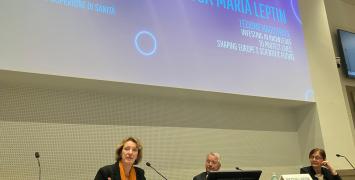
President of the European Research Council Maria Leptin, said:
‘Much looking forward to welcoming six new members, all distinguished in their various fields. Warm thanks go to our outgoing members for their dedication to the ERC over the past years. The independent identification committee has again ensured the continuity and quality of the ERC governing body. I particularly want to acknowledge the committed work of the three outgoing Vice Presidents, who will be replaced by three excellent colleagues from our Scientific Council’.
The new Scientific Council members will replace current members whose second term has ended or is about to expire: Geneviève Almouzni, Mercedes García-Arenal, Gerd Gigerenzer, Eystein Jansen, Jesper Svejstrup and Milena Žic Fuchs. The Vice Presidents elect will replace the current three Vice Presidents, who have all stayed for the maximum number of years. In addition, the Commission has renewed the term of Giovanni Sartor for two years (member since 2022).
The new members have been selected by an independent standing Identification Committee, composed of six distinguished scientists and scholars, appointed by the Commission. The scientific community was consulted in this process. The mandate of the Identification Committee is twofold: to identify new members and to maintain a pool of candidates for future membership.
Biographies
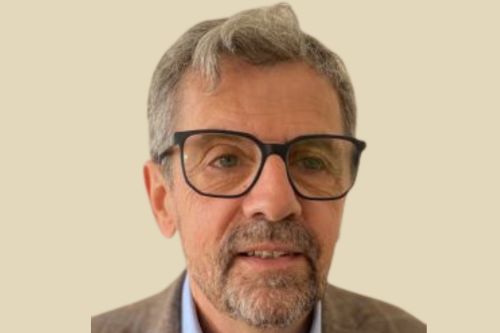
Michel Campillo is a French professor of geophysics. His academic background is in physics, after which he specialised in Earth sciences. He was appointed to the position of professor at the University of Grenoble in 1989 and is now emeritus there. He has held visiting academic positions at several universities outside France. His research has focused on the study of seismic waves propagating within the Earth, the processes that generate them during seismic events, and their subsequent impact. In recent years, his interest has focused on developing passive imaging methods that reveal rapid changes in the Earth's mechanical properties. His work has involved close collaboration with physicists and mathematicians. He served as a member of the CNRS Ethics Committee for ten years. Prof. Campillo has been awarded two ERC Advanced Grants in the past. He won the Humboldt Research Prize in 2017, the Beno Gutenberg Medal from the European Geosciences Union in 2012, and the CNRS Silver Medal in 2003. He is a Fellow of both the American Geophysical Union (2008) and the Institut Universitaire de France (2006) and was elected to the French Académie des Sciences in 2019.
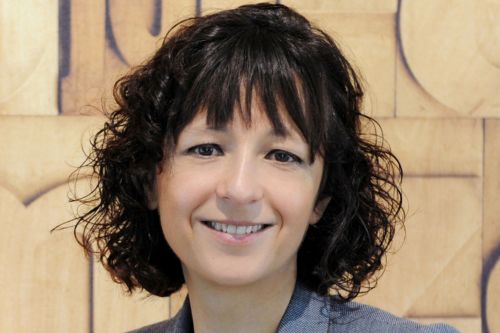 Emmanuelle Charpentier is the founder, scientific and managing director and head of administration of the Max Planck Unit for the Science of Pathogens, as well as honorary professor at Humboldt University, Berlin, Germany. Prior to her current appointments, she was scientific director at the Max Planck Institute for Infection Biology, Berlin; Alexander von Humboldt professor, head of department at the Helmholtz Centre for Infection Research, Braunschweig and full professor at the Hannover Medical School, Germany; visiting and associate professor at the Laboratory for Molecular Infection Medicine Sweden (EMBL Partnership), Umeå University, Sweden; associate professor at the Max F. Perutz Laboratories, and guest and assistant professor at the Institute of Microbiology and Genetics, University of Vienna, Austria. Prof Charpentier held several research associate positions in the USA: The Rockefeller University, New York University Medical Center and Skirball Institute of Biomolecular Medicine, New York, and St. Jude Children’s Research Hospital, Memphis. She received her education in microbiology, biochemistry and genetics at the University Pierre and Marie Curie and the Pasteur Institute in Paris, France. She has been widely recognised for her pioneering and groundbreaking research that laid the foundations for the revolutionary CRISPR-Cas9 genome engineering and editing technology. She has received numerous prestigious international awards and honours, including the 2020 Nobel Prize in Chemistry, and is an elected member of many national and international scientific academies. She co-founded CRISPR Therapeutics and ERS Genomics with Rodger Novak and Shaun Foy.
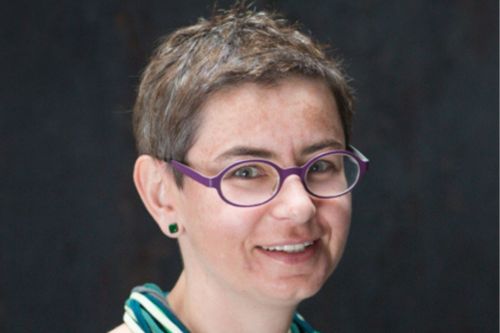
Kateřina Králová is a Czech historian specializing in contemporary European history, memory studies, and post-conflict reconstruction. She is Full Professor at Charles University in Prague, where she leads the Research Centre for Memory Studies, and serves as a senior researcher at the Czech Academy of Sciences. She studied in Marburg and Prague, and has held research fellowships at leading institutions including the US Holocaust Memorial Museum, the Vienna Wiesenthal Institute, the Humboldt Fellowship at HU Berlin, and the Fulbright-Masaryk Fellowship at Yale University. In 2025, she received the Humboldt Alumni Award for her international academic leadership.
Her work focuses on memory politics, postwar transitions, and post-conflict societies. She plays a leading role in European academic cooperation as cluster lead in the 4EU+ Alliance, participant in the Horizon and HERA programmes, and educator within Erasmus Mundus consortia. Králová has been serving on advisory and academic boards (Fulbright Czech Republic, Charles University, Leverhulme Trust project “Times of Polycrisis in the UK and Europe”), evaluating faculty and PhD work (e.g., for Simon Fraser University, University of Vienna), and contributing to multiple editorial boards and scholarly networks. She is an elected member of the Learned Society Czech Republic and remains committed to mentoring early-career scholars internationally.
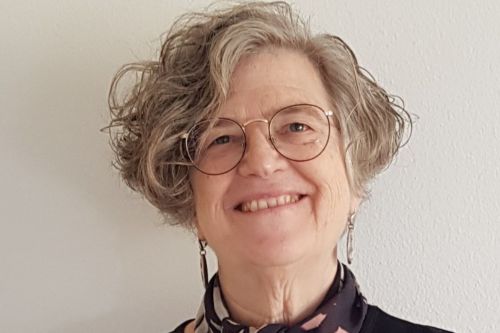
Susana Narotzky is professor of social anthropology at the University of Barcelona, Spain. Prof. Narotzky studied geography and history at the University of Barcelona. She pursued a PhD in social anthropology within the programme of Political and Social Science at the New School for Social Research, New York, completing her degree in 1990, while also completing a doctorate in anthropology at the University of Barcelona. She was appointed associate professor at the Autonomous University of Madrid in 1993 and became full professor in 2006 at the University of Barcelona. Susana Narotzky has received a number of awards and expressions of peer recognition including a Rockefeller Foundation Fellowship for collaborative research (2000), an appointment as member of the Institute for Advance Study in Princeton (2019-2020), and membership of the Academia Europaea (2021-). She was awarded the Spanish National Prize for Research in the Humanities (2020) and has received three times the five-year Fellowship Award ICREA-Academia, Institut Català de Recerca i Estudis Avançats, Generalitat de Catalunya. She is former President of the European Association of Social Anthropology and has served as Secretary of the American Anthropological Association. She has been principal investigator of an ERC Advanced Grant to study the effects of austerity on Southern European livelihoods. Her work is inspired by theories of critical political economy, moral economies, feminist economics and value regimes, and seeks to produce a grounded model of social reproduction processes.
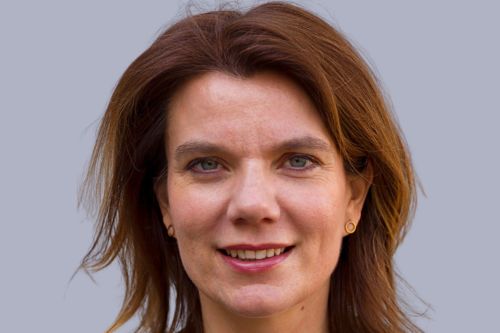
Karin Roelofs is a professor at the Donders Institute and the Behavioural Science Institute at Radboud University in the Netherlands. During her neuropsychology studies, she conducted research at the US National Institutes of Health (NIH). She obtained her PhD in Psychology from Radboud University in 2002. Supported by several research grants from the Dutch Research Council (NWO), she served as assistant and later associate professor at Leiden University from 2002 to 2010. She returned to her alma mater in 2010, where she was appointed full professor and became chair of the Affective Neuroscience group at the Donders Centre for Cognitive Neuroimaging. Prof. Roelofs is a member of the Royal Netherlands Academy of Arts and Sciences (KNAW) and serves on the board of ALLEA (All European Academies). She was a founding member and vice president of the Association for ERC Grantees (AERG) from 2019 to 2025 and previously served as president of the International Resilience Alliance (INTRESA). She has been awarded three ERC grants for her research on the neurocognitive mechanisms underlying stress vulnerability and resilience, including an ERC Starting Grant, Consolidator Grant, and Advanced Grant. She has also secured several consortium grants, including a collaborative Horizon 2020 award and, in 2025, a Dutch Research Agenda – Research along Routes by Consortia (NWA-ORC) grant. In 2020, she received the Evens Science Prize, an international honour recognising societally impactful cognitive neuroscience research, for her work on stress resilience.
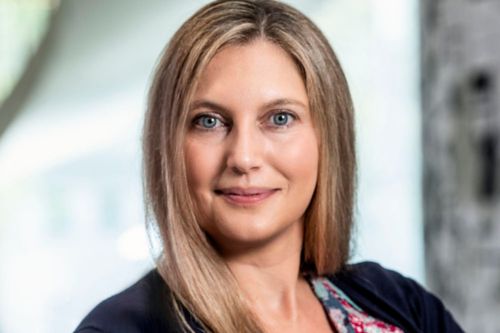 Eleftheria Zeggini is the founding director of the Institute of Translational Genomics at Helmholtz Munich, and TUM Liesel Beckmann Distinguished Professor at the Technical University of Munich, School of Medicine and Health. She obtained a BSc in biochemistry and a PhD in human genomics from the University of Manchester, UK. Following postdoctoral work in complex disease genomics at the Centre for Integrated Genomic and Medical Research in Manchester, and at the Wellcome Trust Centre for Human Genetics in Oxford, she was awarded a Wellcome Trust Research Career Development Fellowship in statistical genetics. She subsequently joined the Human Genetics faculty at the Wellcome Sanger Institute in Cambridge, UK, where she established a research programme advancing analytical genomics of complex traits, before moving to Helmholtz Munich. Eleftheria Zeggini is an honorary professor at the University of Bristol, UK, and has received an honorary doctorate by the University of Thessaly, Faculty of Engineering, Greece. She is a Fellow of the Academy of Medical Sciences (UK), Fellow of ELLIS, Member of the Academia Europaea, Member of EMBO, and serves on the EMBL Council. Her research focuses on leveraging large-scale biomedical data to elucidate mechanisms of disease development and progression, with the goal of accelerating translation and enabling precision medicine.
About the ERC
The ERC, set up by the European Union in 2007, is the premier European funding organisation for excellent frontier research. It funds creative researchers of any nationality and age, to run projects based across Europe. The ERC offers four core grant schemes: Starting Grants, Consolidator Grants, Advanced Grants and Synergy Grants. With its additional Proof of Concept Grant scheme, the ERC helps grantees to bridge the gap between their pioneering research and early phases of its commercialisation. The ERC is led by the Scientific Council, chaired by ERC President Maria Leptin. This independent governing body is composed of 22 distinguished scientists and scholars, who represent the entire European scientific community (not individual countries). Its main role is setting the ERC strategy and selecting the peer review evaluators.
The overall ERC budget from 2021 to 2027 is more than €16 billion, as part of the Horizon Europe programme, under the responsibility of European Commissioner for Startups, Research and Innovation, Ekaterina Zaharieva.