Bringing the Venetian archipelago to digital life

By Donatella Piatto
Ludovica Galeazzo’s professional journey began in architecture and later expanded into urban and architectural history. This dual background shaped her conviction that digital tools can make visible both the material and immaterial heritage of cities.
The Venice lagoon became a natural focus: over time, especially after the fall of the Republic in 1797, dramatic transformations led to the demolition, alteration, or abandonment of many island settlements. As their buildings vanished, so too did their social, political, and cultural significance.
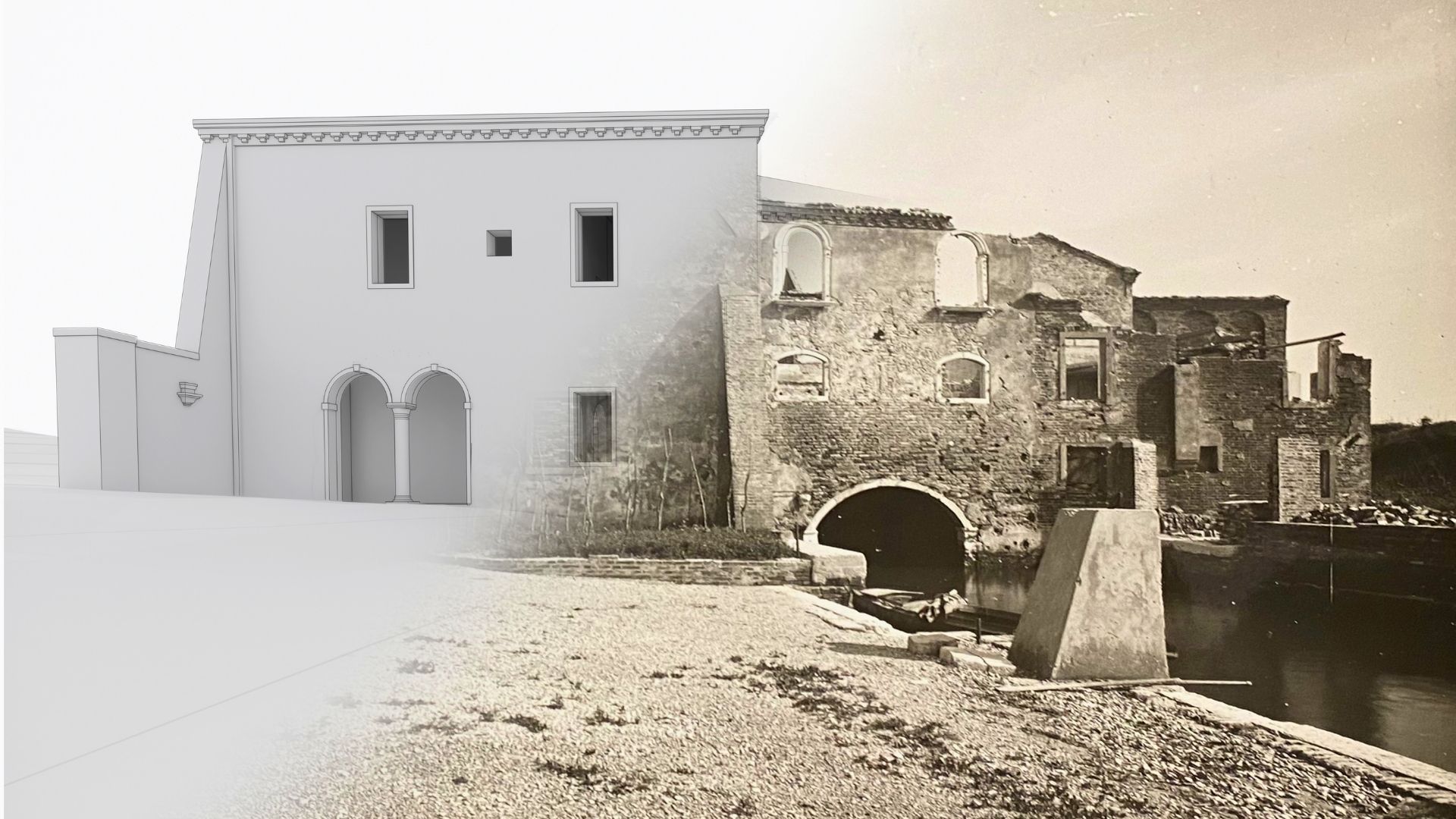
Galeazzo’s ERC-funded project VeNiss approaches this loss not as an irreversible condition, but as a research opportunity. The project brings together a multidisciplinary team - described by Galeazzo as a true ‘human archipelago’ - comprising architectural and art historians, survey and representation specialists, 3D modellers, and semantic database experts. Based at the University of Padua, the University of Florence, and Harvard University–I Tatti, the team integrates diverse skills to reconstruct the lagoon’s layered history.
A journey through the water periphery
Historically, the Venetian archipelago functioned as a carefully orchestrated system supporting the Republic’s survival. A network of more than sixty islands hosted monasteries and convents, military and sanitary infrastructures, food production sites, and foreign communities. Far from being marginal, they were essential nodes in Venice’s urban and territorial network.
As Galeazzo explains, the transformations of the nineteenth and twentieth centuries not only erased much of this built heritage but also obscured the islands’ role as ‘capillary structures’ sustaining the city. VeNiss counters this erasure by digitally reconstructing the lagoon’s water periphery, allowing users to rediscover how these islands operated together as an integrated system.
The project’s 3D geospatial platform connects visualisation with historical narrative. Users can explore a 3D map of the lagoon, navigate through five centuries, and access detailed archival and visual resources, revealing the islands’ transformations and their role in Venice’s history.
Unexpected discoveries
Field surveys revealed more surviving architectural heritage than expected, despite centuries of decay, alteration and neglect. Often hidden by dense vegetation or partially submerged, remains from the early modern period still bear witness to the lagoon’s past.
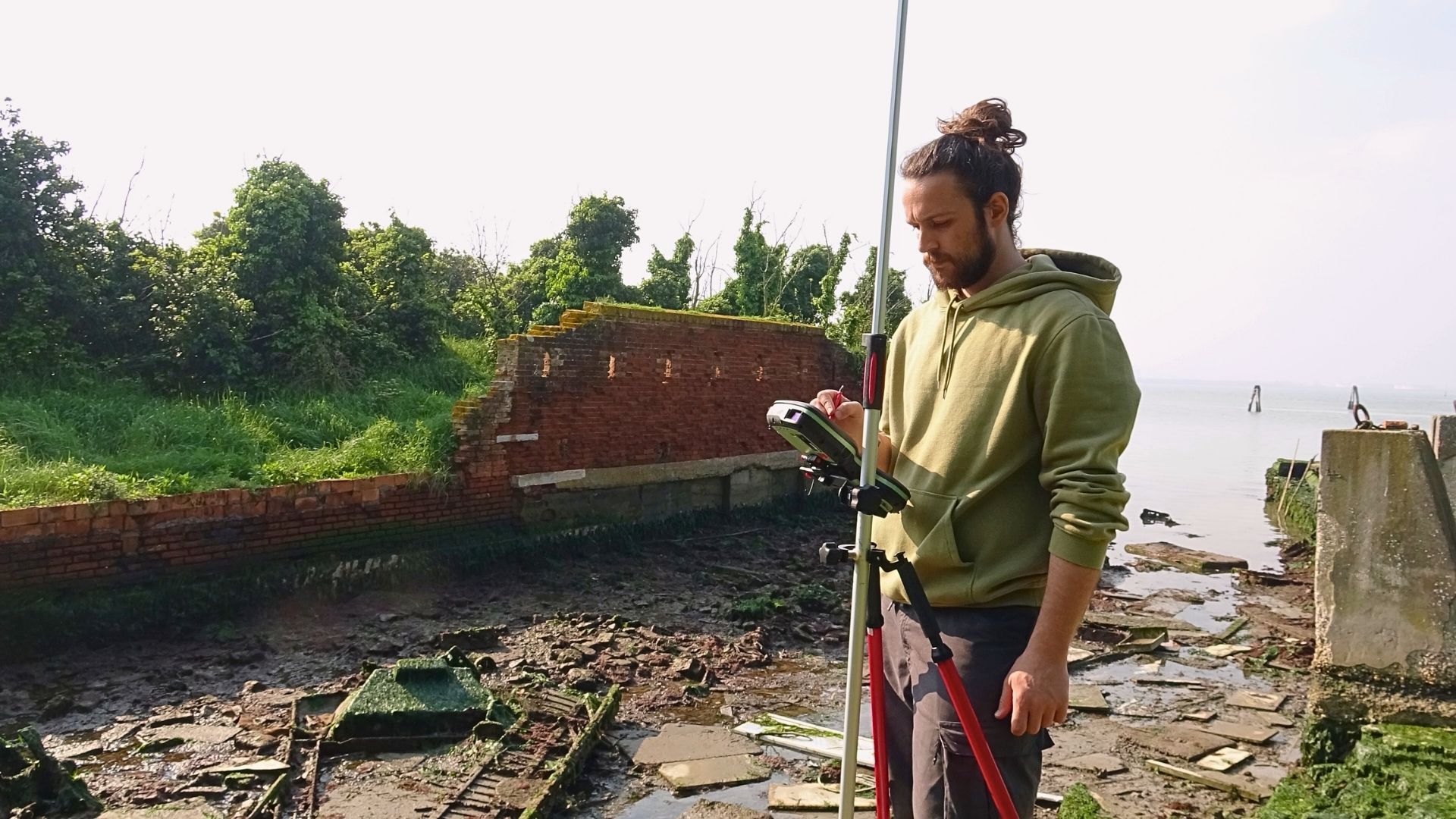
Galeazzo recounts these campaigns with vivid imagery, likening the team to modern ‘Indiana Jones’ figures exploring urban and maritime jungles, coupling boots and cutters with laser scanners, drones, and underwater robots.
These on-site investigations are complemented by extensive archival research, which has uncovered a rich documentary record of political decisions, religious life, artistic commissions, and architectural innovation.
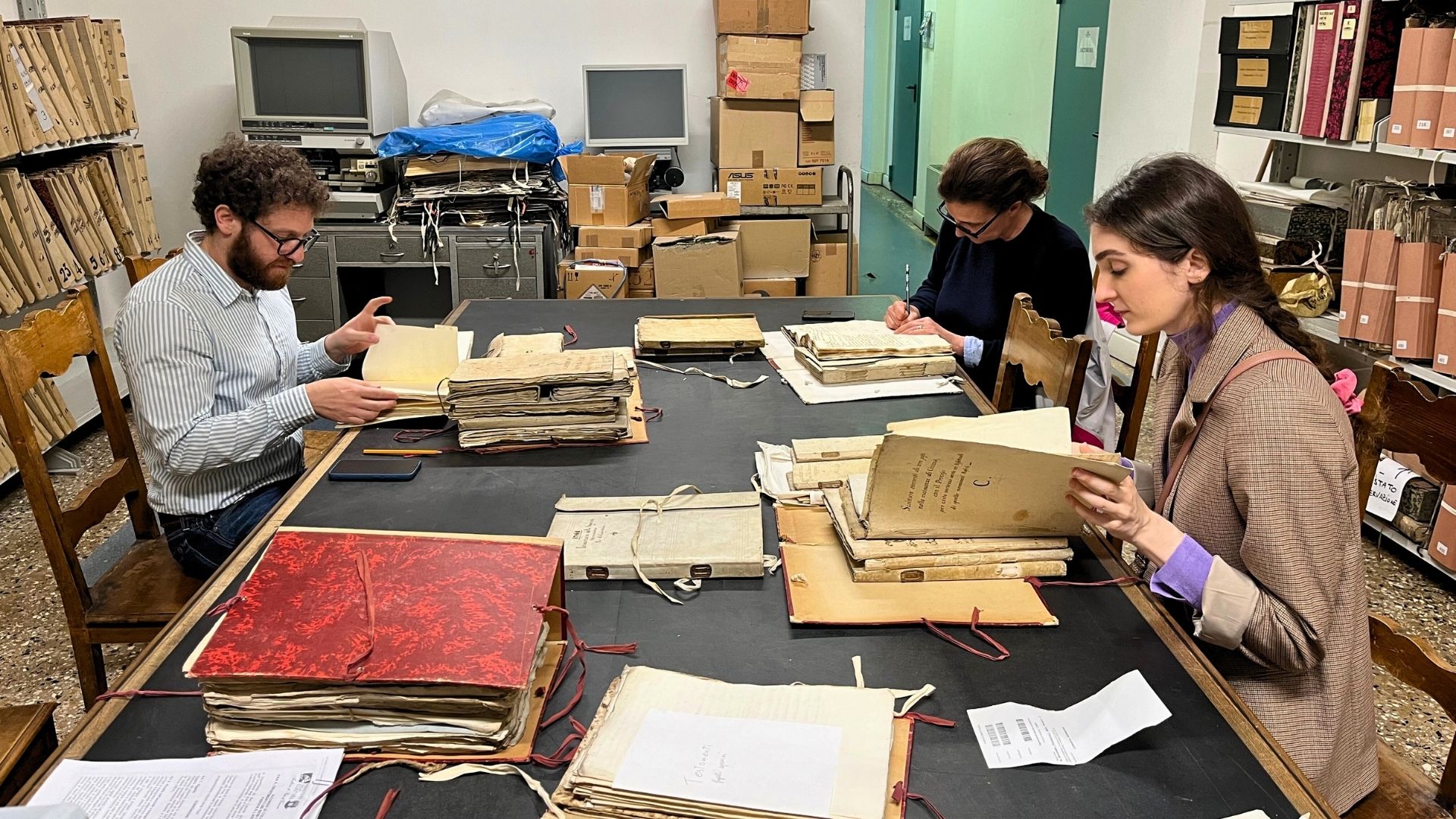
Together, physical evidence and historical sources confirm that the islands were deeply embedded in Venice’s identity. Religious orders, magistracies of the Republic, Venetian nobles, artists, and engineers all shaped these spaces, producing architectural complexes of remarkable experimentation and ambition.
Peripheries as hubs of innovation
A central argument of VeNiss challenges the long-standing view of peripheries as marginal or secondary. As Galeazzo stresses, Venetian islands have too often been treated as ‘liminal spaces, both physically and conceptually detached from the major artistic centres of historic cities.’ In reality, their relative distance from urban constraints made them fertile ground for innovation.
Connected not only to Venice but also to distant regions through maritime networks, the islands fostered architectural and artistic experimentation that sometimes fed back into the city itself. In this sense, the lagoon’s peripheries functioned as dynamic hubs of exchange, creativity, and transformation.
This perspective echoes the words of one of the Republic’s greatest engineers, Cristoforo Sabbadino, who argued in the mid-sixteenth century that Venice without its archipelago would be like a man without eyes or ears. Today, Galeazzo notes, this insight resonates more strongly than ever: ‘Venice would not exist—or, at least not as the city we know—without its lagoon.’
Challenges, impact, and the future
Coordinating a project of this complexity has not been without challenges. ‘Surveying, archival research, modelling, and the development of a new semantic geospatial infrastructure each follow different timelines,’ says Galeazzo. Designing flexible digital tools capable of integrating discoveries as they emerge has been crucial to the project’s success.
Beyond Venice, VeNiss offers a replicable methodology for studying urban landscapes worldwide, across different periods and geographies. By directly linking historical data, qualitative narratives, and quantitative analysis with digital visualisations, the project opens new ways of understanding and protecting cultural heritage.
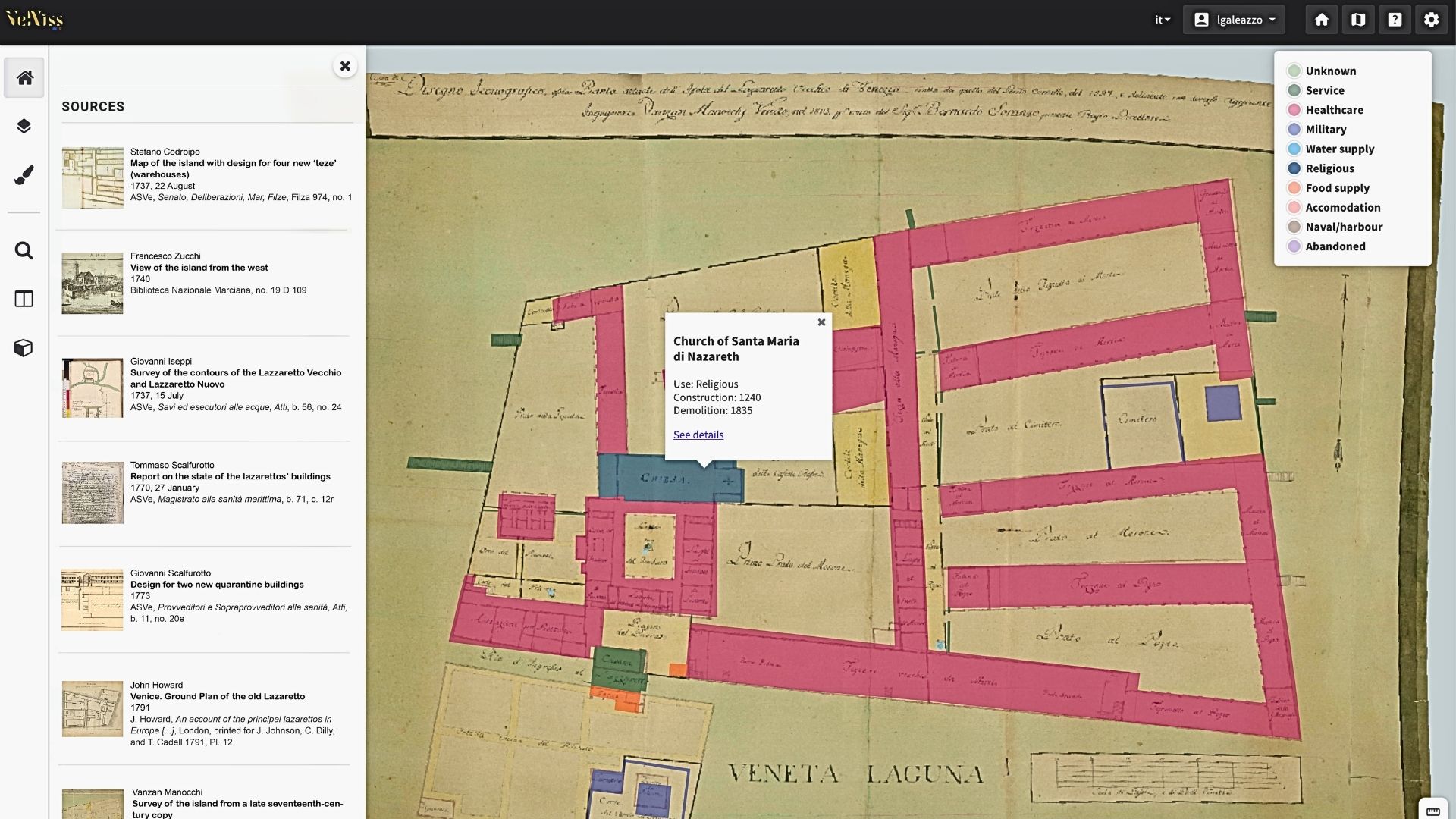
As Galeazzo emphasises, ‘digitally documenting what survives is crucial not only for understanding the territory but also for protecting it during future redevelopment projects.’ Used proactively by public and private actors, VeNiss tools could help safeguard and enhance both artistic and environmental heritage.
In rediscovering the Venice lagoon’s hidden history, VeNiss demonstrates how ERC-funded research can reshape not only academic narratives, but also how we see, understand, and care for fragile urban landscapes.
At a more personal level, the ERC Starting Grant marked a pivotal milestone, enabling Galeazzo to take up an Associate Professorship at the University of Padua and to build a diverse research team, while creating meaningful opportunities for early-career researchers to gain international visibility and advance their academic careers.

Biography
Ludovica Galeazzo is an architectural and urban historian at the University of Padua, whose research focuses on Venetian architecture in the early modern period with a special interest in new technologies to demonstrate the process of the city’s change over time. She received her PhD in History of Arts from the Graduate School Ca’ Foscari-Iuav in Venice and was later a Research Fellow at the Iuav University of Architecture (2013-2016) and a Postdoctoral Associate at Duke University (2016-2017). In 2019 she was the recipient of the Kress fellowship in Digital Humanities at I Tatti, the Harvard University Center for Italian Renaissance Studies, where she continues to hold an appointment as a Research Associate.
Project information