Why are we not living longer?

By Ana Rita Leandro
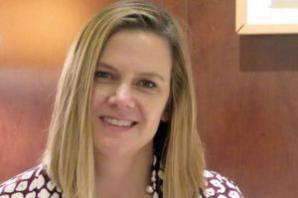
Jennifer Dowd came of age as a researcher during an era of consistent improvements in life expectancy, with future gains seeming automatic. The recent stalls and reversals in countries such as the US and the UK came as an unwelcome surprise. ‘Increasing life expectancy has been taken for granted as a marker of human progress, so it makes you stop and wonder what might be going wrong when that progress stalls or reverses’, she says. The puzzle of finding what’s going wrong, and why, is what drives Dowd and the MORTAL project.
Beyond ‘deaths of despair’
Until recently, research on stalling life expectancy had been largely US-centric, focused on so-called ‘deaths of despair’ (mortality from suicide, drug overdose, and alcohol). But when Dowd and her team looked closely at mortality trends in the UK compared with other European countries, they found parallels with the US in midlife mortality patterns, but with cardiovascular disease mortality rather than external causes. These findings helped shift attention away from a narrow focus on specific age groups or causes of death and towards understanding the broader, more varied trends affecting many countries.
A biosocial approach to health
This complexity is where Dowd’s biosocial approach comes in. Rather than treating biological and social phenomena as independent, her research acknowledges that the two are inseparable. Human biology is, at its core, shaped by social conditions across an entire lifetime. ‘The human body tells stories, telling us a lot about the quality of the environments around us from the day we’re born, or even in utero. Your whole life, from the house and neighbourhood you grew up in to the social relationships you have, leaves an imprint on your biology. Social isolation is very stressful for humans, for example, and this might affect one’s health over time through stress hormones, suppressed immune function, and inflammation,’ she says. ‘Being exposed to high levels of air pollution or maternal smoking early in life can have long-lasting effects on health, leaving signatures in different biological measurements such as epigenetics.’
Importantly, this means that to understand why people are dying today, you often have to look back decades. Life expectancy improvements slowed in many countries after 2010, leading some to attribute this trend to economic disruptions such as the Great Recession and resulting austerity measures. But the cohorts reaching older age now carried their health risks with them from much earlier in life. People currently in midlife, for example, were among the first to grow up during the obesity epidemic, meaning they may have lived many more years with obesity than previous generations. Understanding current mortality trends requires understanding the risk environments those cohorts faced long before they fell ill.
Dowd’s own background, spanning demography, epidemiology, and economics, reflects this interdisciplinary perspective. She collaborates with researchers across the social and biological sciences, combining analyses of economic factors such as employment and education with biological outcomes including epigenetic ageing and the microbiome. ‘These interdisciplinary collaborations are where the magic happens, and science moves forward.’ The goal is a picture of population health and mortality that spans from the cellular to the societal level.
Moving backwards in health
One of MORTAL's most striking findings is what Dowd and her collaborators call ‘generational health drift’: evidence that younger generations may be entering midlife and older age with worse health than those who came before them. The optimistic shorthand of recent decades, that 40 is the new 30 and 60 is the new 50, may no longer hold.
This trend is concerning on its own, but especially against the backdrop of ageing populations, where it could place additional strain on health and social care systems.
While life expectancy is a familiar metric for demographers, it is less intuitive for policymakers. A gap of two years, say 79 versus 81, can seem marginal, as if it just means slightly less time at the end of life. But life expectancy is a population average, and a two-year gap often reflects many people dying well before their time. ‘I want policymakers to see this as a worthwhile focus,’ Dowd says. That means recognising that social and economic conditions, including stable employment, economic safety nets, and social connection, are key determinants of health outcomes, not just individual lifestyle choices.
Reasons for cautious optimism
Despite these concerns, Dowd is not pessimistic. ‘Sometimes we hyper-focus on things that are changing just in the moment, and we need to zoom out and look at the big picture. These slowdowns and reversals could be temporary blips, with countries soon returning to a steady upward march in life expectancy,’ she says. Eastern Europe, for example, saw sharp drops in life expectancy in the 1990s and has since recovered rapidly.
Dowd also points to top-performing countries such as Japan and South Korea as evidence that slowdowns in the UK, the US, and elsewhere do not reflect a biological ceiling. ‘The countries with the highest life expectancy show us that lower mortality is achievable and may give us clues on how to get there,’ Dowd says.
Dowd is also watching closely to see whether GLP-1 drugs, which have shown striking effects on obesity and cardiovascular risk, might help reverse some of the adverse trends MORTAL is documenting. But she is cautious: like any new technology, these drugs may fall short of early promise. Population science, she argues, will be essential for understanding how this promising new technology interacts with the broader social determinants that shape obesity and health across the life course.
‘There is still a lot of improvement in population health that we can achieve. Higher life expectancy is biologically achievable, and it is up to us as societies to understand the social, physical, and economic environments we can build to help people reach their full health potential. This means not only long lives but lives that are as happy and healthy as possible throughout, Dowd concludes.
Biography
Jennifer Beam Dowd is Professor of Demography and Population Health at the University of Oxford and Deputy Director of the Leverhulme Centre for Demographic Science. She holds a PhD in Demography and Economics from Princeton University and completed postdoctoral training in Epidemiology at the University of Michigan. During the COVID-19 pandemic, she helped launch Dear Pandemic (now Those Nerdy Girls), a science communication platform that reached millions with practical, evidence-based information for which she won multiple awards. She now writes the Substack newsletter Data for Health, where she demystifies the science and statistics behind healthy aging, demography, and more.
Project information