From tickling to AI in hospitals: Eight researchers win ERC public engagement awards

The European Research Council (ERC) awards recognise outstanding science communicators among the grantees who successfully engage audiences outside their domain. The purpose of the award is also to show good practice in science communication and to encourage more ERC-funded researchers to develop public engagement activities. This is the fourth edition of the awards, first launched in 2019.
Ekaterina Zaharieva, European Commissioner for Startups, Research and Innovation, said:
'People increasingly expect more than simply being told what science says. They want to understand how scientists know, ask questions and be part of the conversation. This openness is essential to building trust between science and society. I congratulate the eight awardees and commend the ERC for recognising and encouraging EU-funded researchers who engage with the public.’
Luke O’Neill, member of the ERC Scientific Council who observed the work of the jury, said:
‘Good science communication means not only sharing the excitement and curiosity that drive science but also being honest about what we don’t know, and listening to and learning from people’s questions, concerns and perspectives. I’m delighted to see so many ERC grantees putting this into practice every day, and I hope the stories of these award winners will inspire many more researchers to engage with the public.’
The laureates will discuss what they have learnt from their public engagement work at a dedicated session during the European Research and Innovation Days in Brussels in November.
The laureates
Elaine Chew, King’s College London, was awarded ‘for a boundary-spanning and truly interdisciplinary approach reaching millions of ears and hearts.’
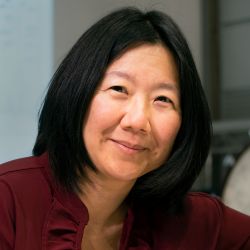
Her initiative translates pioneering research on music and cardiovascular health into an engaging citizen-science initiative. It enables the public, musicians and clinicians to contribute data and explore how arrhythmical (and regular) music affects the heart. Through innovative digital tools, recordings and live demonstrations, the project increases awareness of music-based health applications and seeks to inspire new interdisciplinary collaborations between music, technology and medicine.
Katalin Csilléry, Swiss Federal Institute for Forest Snow and Landscape Research WSL, was awarded ‘for sowing the seeds of a European-wide network of foresters and transforming forests into living laboratories to shape scientific discovery.’
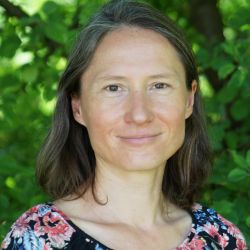
Her project creates a pan-European network of foresters who collaborate with scientists to investigate how genetic origin and local forest conditions jointly shape the regeneration and growth of forest trees. By establishing and monitoring hundreds of experimental micro-gardens across 23 countries, participants become active contributors to research, generating new knowledge to inform climate-adaptive forest management.
Konstantina Kilteni, Karolinska Institute and Donders Institute, was awarded ‘for transforming a universal and seemingly trivial experience into serious scientific insights through dialogue and laughter.’
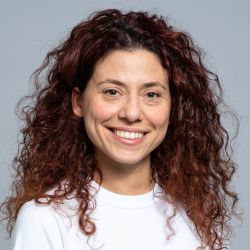
Her initiative explores human ticklishness from a neuroscience perspective, addressing questions such as: Why are humans ticklish? Why can’t we tickle ourselves? It shows how an everyday and seemingly trivial experience can reveal fundamental principles underlying how the brain predicts, processes, and interprets touch, while creating a two-way dialogue between science and society through museum-based public engagement.
Prabha Kotiswaran, King’s College London, was awarded ‘for bringing visibility to women’s invisible labour in India, shaping societal change from primary school to Supreme Court rulings.’
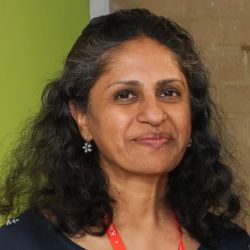
The team she leads raised awareness of women’s rights and their invisible work in India among legislators, judges, ministers and bureaucrats as well as wider society, contributing to changes in policy and shaping public discourse. The project has developed advocacy campaigns informed by robust evidence on sex work, surrogacy, paid and unpaid domestic work and worked with a well-known feminist filmmaker to produce a documentary exhibited in India, Nepal, Thailand and Bangladesh. Its educational kit has also been adopted in schools.
Sarah Lebeer, University of Antwerp, was awarded ‘for taking us on a participatory journey into how bonobos, vaginas, strawberries and kimchi are unexpectedly connected through microbiomes.’
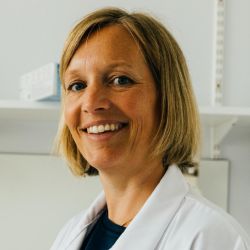
Together with her team, she transforms research on beneficial lactobacilli and the microbiome into a series of citizen science projects that invite citizens to discover, explore and co-create research on women’s health, fermented foods, sustainable agriculture and microbial evolution. By combining personalised microbiome feedback, including insights into the presence and diversity of lactobacilli, with public participation and scientific excellence, these initiatives advance knowledge while strengthening public trust in science and enhancing societal impact.
Karim Lekadir, University of Barcelona, was awarded ‘for his respect, trust-building and culturally sensitive choice of channels in engaging women in local communities, who claimed the project as their own.’
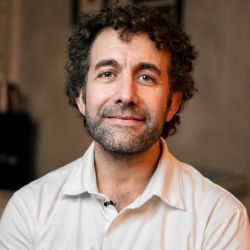
The project has built trust around AI-supported pregnancy ultrasound screening in rural Kenya by engaging expectant mothers and the people who influence their healthcare decisions. Through culturally sensitive channels such as baraza meetings and dialogue with religious leaders, local communities helped shape the technology and have made the project their own, even renaming it “Scan Zetu”, meaning “our scan”.
Valeria Pulignano, KU Leuven, was awarded ‘for bringing the unheard voices of delivery drivers and platform workers to influence EU laws.’
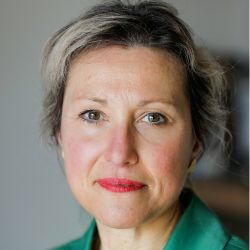
Millions rely on digital platforms every day, yet few see the hidden costs borne by the workers who keep them running—from delivery drivers and ride-share workers to those performing a growing range of digitally mediated tasks. Through workshops, roundtables and surveys, her initiative uncovers how platform work shifts unpaid hours, risk and uncertainty onto workers, while building the capacity of workers and stakeholders to make their voices heard, turning research into public debate and helping build momentum for policy change across Europe in pursuit of fairer working conditions and greater social justice in the digital economy.
Roanne van Voorst, University of Amsterdam, was awarded ‘for her highly original use of a co-created theatre experience to voice ethical AI dilemmas in healthcare.’
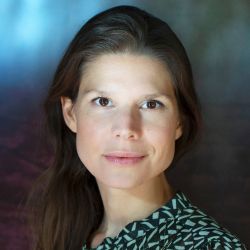
Drawing on the real experiences of doctors, nurses and AI developers, the project brings powerful stories about AI in healthcare directly to the theatre stage. It creates a safe and accessible space in which sensitive concerns, experiences and dilemmas among those who develop and work with AI can be voiced and discussed. Through immersive performances and open discussions, it facilitates public debate on trust, ethics and patient safety in AI-assisted healthcare, turning complex scientific research into a compelling experience that illuminates the human impact of AI in modern medicine.
About the awards
In the 2026 ERC Public Engagement with Research Awards contest 110 applications from 26 countries were submitted. An independent jury of experts in public engagement and science communication selected the eight winners. Each laureate receives a prize of €10.000. Previous editions took place in 2020, 2022 and 2024.