Starting Grants 2026: Examples of projects

Rethinking inheritance rules in Europe
 Europe is experiencing the largest transfer of wealth in its history. Homes, savings, and family businesses are being passed from one generation to the next. Yet the rules governing inheritance are often perceived as outdated and inflexible — a perception that also extends to the succession law of Central Europe. Equally, this region is frequently portrayed as merely adopting legal models from the West, particularly during periods of political and legal transformation. Dorota Miler’s research challenges these views.
Dr Miler’s project examines inheritance rules across Central Europe to demonstrate that the region is not just a receiver of legal ideas, but also a source of creative solutions. It explores how these legal systems have evolved in response to changing family structures, growing mobility, and the rise of new technologies. In doing so, it questions the outdated assumption that legal innovation flows in only one direction – from West to East.
This matters far beyond academia. Inheritance rules that fail to reflect modern realities can lead to family conflict, legal uncertainty, and unjust outcomes. By identifying practical ideas from Central Europe, this project could help modernise inheritance law across Europe and support better cooperation between national systems. It also offers a fresh perspective on the region’s legal history and challenges stereotypes that still shape policy debates.
Dorota Miler is an associate professor at the Faculty of Law and Administration at the University of Gdańsk. She completed her PhD and postdoctoral studies in Germany. Upon returning to Poland, she has dedicated her research to the legal status of unmarried partners in inheritance law, supported by a grant from the Polish National Science Centre.
Project information:
- Researcher: Dorota Miler
- Project: Beyond Western Europe: Uncovering the Neglected Succession Law of Central Europe (CESuccess)
- Host Institution: University of Gdansk (PL)
- ERC funding: € 1.5 million for 5 years
Watching brains in action
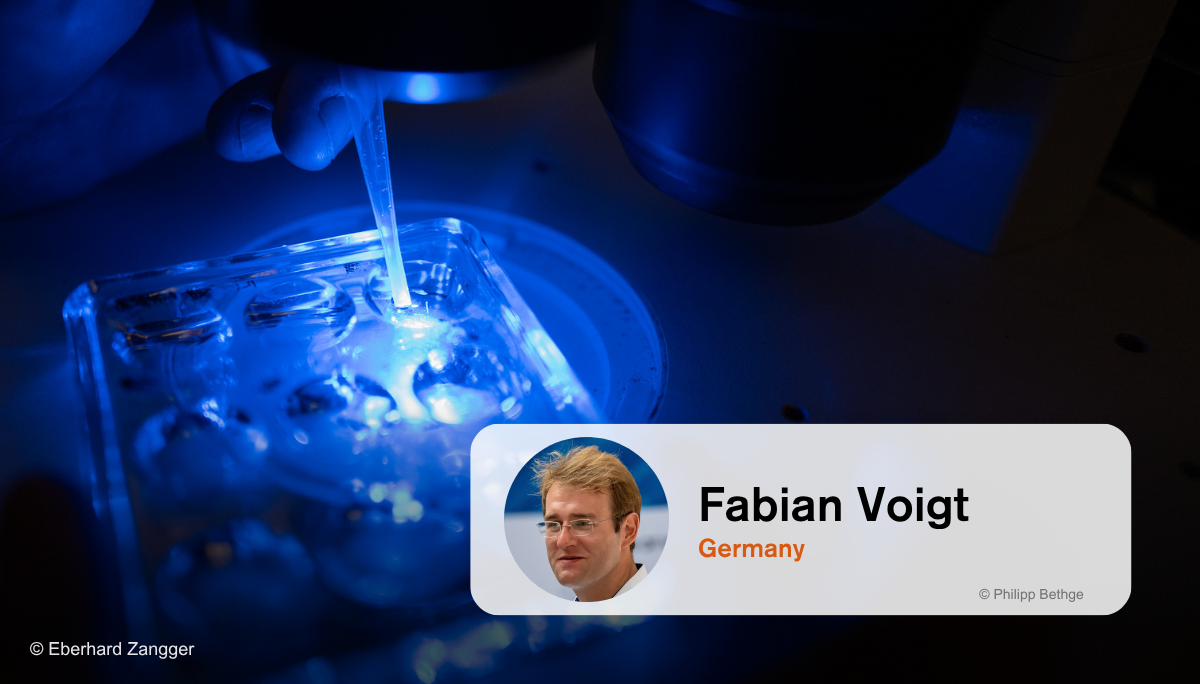
How does the brain turn what we see, hear and feel into action? This is one of the biggest unanswered questions in science. Researchers have made remarkable progress in understanding the brain, but there is one important limitation: most brain-imagining methods for small animals such as larval fish or fruit flies require them to be either restrained or moving in highly controlled environments. As a result, it remains unclear how such artificial contexts accurately capture the brain dynamics of freely moving animals.
Fabian Voigt and his team at the Max Planck Institute for the Science of Light will address this challenge by developing optical tools that allow scientists to observe brain activity in small, freely moving animals. Rather than restricting movement, the project will enable walking fruit flies and small fish to explore complex three-dimensional environments while their brain activity is recorded in real time.
To achieve this, the project will combine cutting-edge advances in machine vision, optics and microscopy to create a new type of tracking microscope capable of following an animal's movements with exceptional speed and precision while simultaneously capturing the activity of individual brain cells.
Beyond advancing our understanding of how the brain generates behaviour, the technologies developed through this research will be openly shared with the scientific community, making them available for many other areas of neuroscience research and helping to accelerate future discoveries.
Fabian Voigt studied Interdisciplinary Sciences at ETH Zurich and received his PhD in 2019 from the University of Zurich. Previously he has been a HFSP postdoctoral fellow in the lab of Florian Engert at Harvard University and a Branco Weiss Fellow in the same lab.
Project information:
- Researcher: Fabian Voigt
- Project: Metasurface-based brain observatories (KALEIDOSCOPE)
- Host Institution: Max Planck Gesellschaft zur Forderung der Wissenschaften
- ERC funding: € 2.5 million over 5 years (incl. extra funding for applying outside of Europe)
Inside the fungal city: fighting a deadly infection
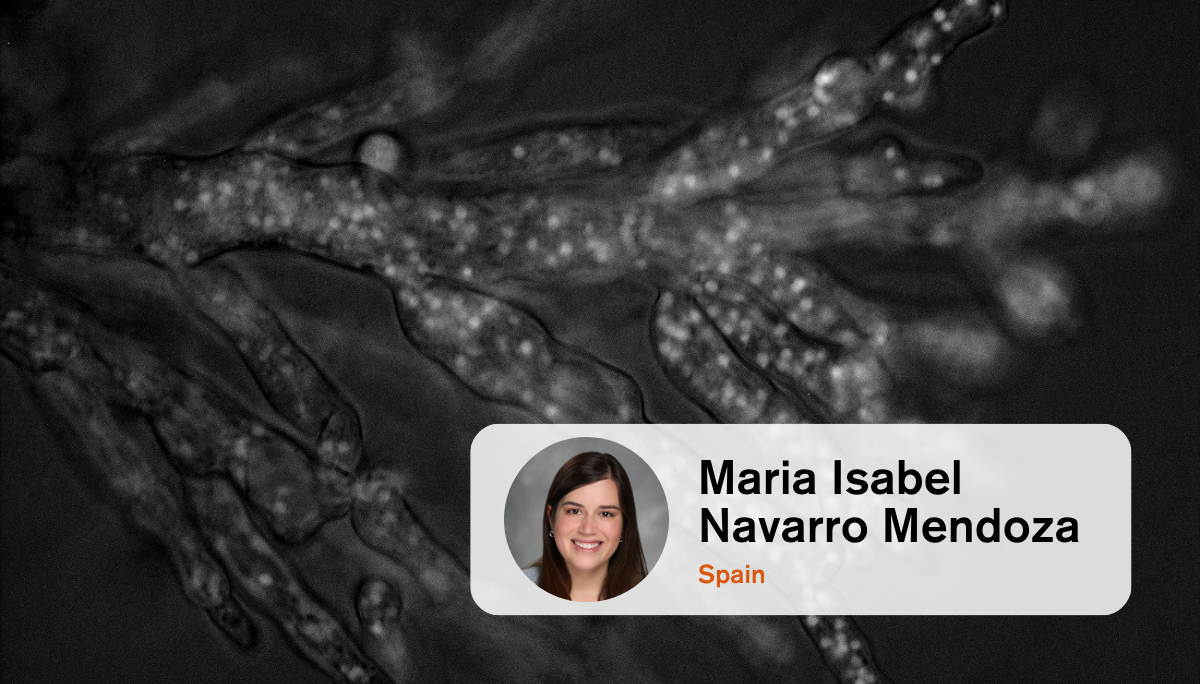
Fungal diseases represent a major and underestimated threat to global health, now accounting for 6.8% of total annual deaths worldwide, surpassing tuberculosis, malaria, hepatitis or pneumonia.
Mucorales fungi are human pathogens responsible for the devastating infection mucormycosis. Mucormycosis, or “Black Fungus”, is marked by rapid invasion of the bloodstream, tissue death and high mortality rates. These fungi are naturally resistant to most antifungal drugs, leaving patients with very few treatment options.
A major obstacle to combating mucormycosis lies in the unique biology of Mucorales. These fungi form a syncytium, a giant cell in which hundreds of nuclei share the same cytoplasm. SynCity will test whether these nuclei act like specialised districts within a city, allowing different regions of the fungus to invade tissues, evade host defences or resist treatment.
To uncover how these fungal cities operate, Maria Isabel Navarro Mendoza will combine single-nucleus and spatial multi-omics with human vascular organoids that recreate fungal invasion of blood vessels. Together, these approaches will create a molecular map of activity across individual nuclei and infected tissues, revealing how individual nuclei operate during infection and contribute to antifungal resistance.
By challenging the textbook idea of “one cell, one nucleus, one function”, the results of this research will fundamentally change our understanding of fungal biology and inspire new strategies to prevent and treat mucormycosis, as well as potentially other human infections and diseases.
Fungal geneticist Maria Isabel Navarro Mendoza is currently an Assistant Professor at Universidad Miguel Hernández and will start the project at the University of Murcia, Department of Genetics and Microbiology, as a Ramón y Cajal Fellow.
Project information:
- Researcher: Maria Isabel Navarro Mendoza
- Project: Syncytial compartmentalization driving antifungal drug resistance and pathogenesis in multinucleate fungi (SynCity)
- Host Institution: Universidad Miguel Hernández de Elche (Spain)
- ERC funding: € 1.5 million over 5 years