Synergy Grants 2026: Examples of projects

How migration reshapes the languages of childhood
What happens to your childhood language when life takes you across borders and then back again? For millions of bilingual speakers, this is more than an academic question. It shapes education, identity and a sense of belonging.
It is also a question that the new research project, NAVAR, will tackle, exploring how migration influences the languages people acquired in early childhood. The researchers will focus on bilingual speakers who grew up in Germany speaking both German and a heritage language, either Polish or Portuguese, and later moved to Poland or Portugal. In this new environment, the heritage language becomes the language of everyday life, while German may be used only occasionally.
The researchers will investigate how first languages change across the lifespan and whether similar patterns can be observed in different bilingual communities. Using innovative methods and creating an open-access database, the study will provide new insights into language development, bilingualism and human cognition.
Beyond answering linguistic questions, the findings could support multilingual education, inform migration-related policies and help strengthen linguistic diversity in an increasingly mobile world.
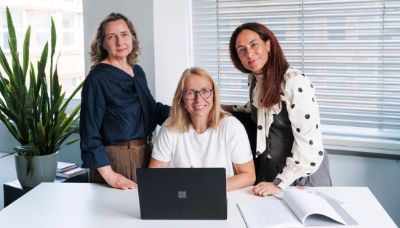
The research brings together three leading experts in bilingualism and language development: Esther Rinke from Goethe University Frankfurt in Germany, Cristina Flores from the University of Minho in Portugal, and Aldona Sopata from Adam Mickiewicz University in Poland. Together, they combine complementary expertise to address fundamental questions about language, identity and human cognition.
Project: NAVAR - Navigating the Pathways of Nativeness: Attrition and Reinforcement of Childhood Languages in Contexts of Return Migration
Researchers:
- Esther Rinke, Goethe University Frankfurt, Germany
- Cristina Flores, University of Minho, Portugal
- Aldona Sopata, Adam Mickiewicz University, Poland
ERC funding: €8.8 million over 72 months
Restoring sight beyond shapes and objects
For people who have lost their sight because of retinal disease, restoring even partial vision can be life changing. In 2021and 2026 researchers achieved a major breakthrough: blind patients treated with optogenetic therapy - a technique that makes surviving retinal cells sensitive to light - were able to perceive, locate and touch objects. Yet the vision restored so far remains limited: patients cannot recognise faces or read.
Now, some of the researchers behind this breakthrough are joining forces to take the next step: from partial sight to high-resolution vision. Their project, REVIVE, will combine optogenetics, the field recognised by the 2026 Nobel Prize in Physiology or Medicine, with advanced light-stimulation technologies designed to activate retinal ganglion cells with far greater precision. They will first develop an optical system that can project carefully shaped patterns of light onto the retina, while compensating for the eye’s natural structure and movements. In parallel, they will develop a new generation of optogenetic therapies that can target ganglion cells more precisely and make their response to light more accurate.
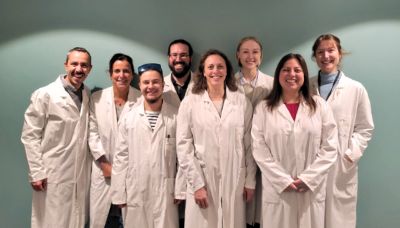
Bringing together physics, neuroscience, molecular biology and clinical research, REVIVE aims to build on an experimental approach that has already restored basic visual functions and develop it into a technology capable of supporting more detailed vision. If successful, the project could ultimately improve independence and quality of life for people living with severe retinal disorders. The project brings together Valentina Emiliani at CNRS and Vision Institute in France, José-Alain Sahel at the University of Pittsburgh in the US, and Botond Roska at the Institute of Molecular and Clinical Ophthalmology Basel in Switzerland, with expertise spanning photonics, vision restoration and retinal gene therapy.
Project: REVIVE - Restoring high-resolution vision through optogenetic and photonic Engineering
Researchers:
- Valentina Emiliani, National Centre for Scientific Research (CNRS), France
- José-Alain Sahel, University of Pittsburgh, US
- Botond Roska, Institute of Molecular and Clinical Ophthalmology Basel, Switzerland
ERC funding: €10.28 million over 72 months
Breaking the ice: unveiling the Antarctic
Since its exploration began, Antarctica has stirred humanity's curiosity and sense of mystery due to its vast, impenetrable layers of ice and rock. Today, we understand that the Antarctic ice shelves are far more than remote terrain: they play a crucial role in the climate system and in the future evolution of sea levels.
The use of satellites and drones has given us greater insight into small-scale processes occurring on the surface. Yet, we still know far less about what happens within, and especially at the base of these massive ice shelves.
An ice cube floating in a glass of muddy water offers a simple way to understand the challenge: we can easily see its surface, but not what is happening underwater or inside it. If the surrounding water becomes warmer, it can transfer heat to the ice and accelerate melting. In Antarctica, this same process occurs on a much larger, harder-to-observe scale.
The SKUA project - a collaboration involving four grantees in Sweden, Denmark, Netherlands and the United Kingdom - aims to bridge this knowledge gap. To do so, the project will deploy autonomous underwater vehicles, borehole sensors and turbulence meters, while using artificial intelligence to enhance the processing and analysis of satellite data.
The team will conduct fieldwork on the 400 km long Riiser-Larsen Ice Shelf along the coast of East Antarctica, to gather comprehensive measurements of how ocean heat interacts with the ice, as well as the processes occurring both within and on the surface of the shelf. This data will enable a better understanding of where and how melting occurs, where fractures form, and which processes might weaken the ice shelf.
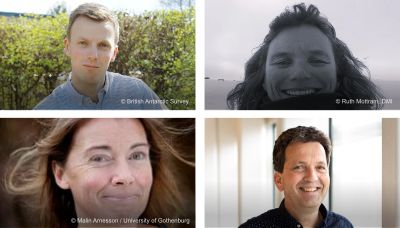
The project will complementary expertise of four leading researchers: Anna Wåhlin at the University of Gothenburg, Ruth Mottram at the Danish Meteorological Institute, Roderik Van de Wal at Utrecht University and Peter Davis at British Antarctic Survey. They will seek to better understand the evolution and stability of Antarctic ice shelves, thereby improving our ability to predict changes and their potential consequences for both Antarctica and global sea levels.
Project: SKUA - Studying the known unknown of Antarctic ice shelves
Researchers:
- Anna Wåhlin, University of Gothenburg, Sweden
- Ruth Mottram, Danish Meteorological Institute, Denmark
- Roderik Van de Wal, Utrecht University, the Netherlands
- Peter Davis, British Antarctic Survey, the UK
ERC funding: €14 million over 72 months