
Three new ERC Scientific Council members and two new vice-presidents

The new members and the new vice-presidents will start their terms on 1 January 2027, replacing those whose terms have ended. The initial term for the new members of the ERC governing body is four years, while the renewal extends five members' term by two years.
The three new members are:
Professor Ulrike Diebold, TU Wien,
Professor Crisanto Gutierrez, Spanish National Research Council, and
Professor Maris Laan, University of Tartu.
The members whose terms have been extended by two years are:
Professor Harriet Bulkeley, Durham University,
Professor Thomas Henzinger, Institute of Science and Technology Austria,
Professor Leszek Kaczmarek, Nencki Institute of Experimental Biology, Warsaw,
Professor Luke O’Neill, Trinity College, Dublin, and
Professor Björn Ottersten, University of Luxemburg.
The Scientific Council has also elected from amongst its members two new vice-presidents:
- Professor Thomas Henzinger, Institute of Science and Technology Austria (in charge of the Physical Sciences and Engineering matters),
Professor Luke O’Neill, Trinity College, Dublin (in charge of the Life Sciences matters).
ERC President Maria Leptin said:
'We are very pleased to soon welcome three new outstanding researchers to our Scientific Council. We thank the outgoing members for their dedication, two of whom have skilfully served as vice-presidents too. We look forward to working with our newly elected vice-presidents as we enter a crucial period ahead of the new Framework Programme.'
The outgoing members are Professors Liselotte Højgaard, Dirk Inzé and Nicola Spaldin. They will succeed members whose mandates expire at the end of 2026. Professor Henzinger will replace Professor Nicola Spaldin as vice-president, while Professor O'Neill will take over from Professor Liselotte Højgaard as vice-president.
Biographies of new members of the Scientific Council
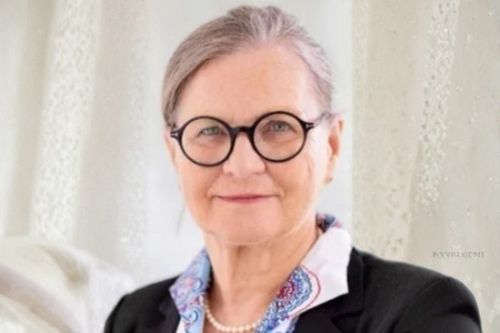 Ulrike Diebold is Professor of Surface Physics at the Institute of Applied Physics, TU Wien (Vienna University of Technology), Austria, where she has held a chair since 2010. She received her PhD in engineering physics from TU Wien, then moved to Rutgers University, New Jersey, as a postdoctoral researcher. She subsequently joined the faculty of Tulane University in New Orleans, where she rose to full professor, holding the Yahoo! Founder Chair of Science and Engineering before returning to Vienna. Since 2022 she has also served as Vice President of the Austrian Academy of Sciences.
Prof. Diebold is an experimental surface scientist, specialising in the atomic-scale properties and reactivity of metal oxide surfaces. Her research combines scanning probe microscopy and other surface-sensitive techniques, in close collaboration with computational groups, to advance the fundamental understanding of phenomena relevant to catalysis, photocatalysis, and materials chemistry. Her contributions to science have been recognized the Wittgenstein Prize - Austria’s highest scientific honour - the Blaise Pascal Medal in Materials Science of the European Academy of Sciences, the Friedrich Wilhelm Bessel Research Prize of the Alexander von Humboldt Foundation, and the Arthur W. Adamson Award of the American Chemical Society. She is the recipient of two ERC Advanced Grants. She is an elected member of the Austrian, German (Leopoldina), and European Academies of Sciences, the Academia Europaea, and the American Academy of Arts and Sciences, and a Fellow of the American Physical Society, AVS, AAAS, and the Royal Society of Chemistry.
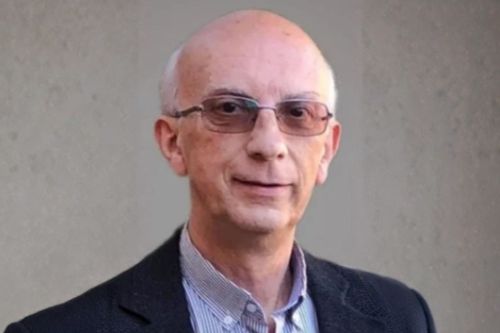
Crisanto Gutierrez is a cell and molecular biologist with interest in understanding the links of DNA replication and cell proliferation with chromatin dynamics during development, areas where he is internationally recognised. Over the years, he has used several model systems, including human oncoviruses, plant DNA viruses and the plant Arabidopsis thaliana. His pioneering work on the role of tumour suppressor proteins in plant cell division and development, and studies on the specification of DNA replication origins have contributed significantly to the advance in these fields.
He received his PhD in 1980 (Madrid) and was appointed Assistant Professor of Cell Biology (Univ. Alcalá de Henares, 1982) before moving to Harvard Medical School and Roche Institute of Cell Biology (1986). He started his group in 1993 at the Centro de Biologia Molecular Severo Ochoa, where he has been Director of the Institute of Molecular Biology (2002-2006) and head of the Program on Genome Dynamics and Function (2007-2025). Currently he is Professor Ad Honorem (CSIC). He is an editor of The EMBO Journal and has previously served as an editor of EMBO Reports and The Plant Journal, among others. He has also served on the governing body of the Spanish Society of Biochemistry and Molecular Biology. He was elected EMBO Member (1998), serving in several committees, as well as in the EMBO Council (2020-2025) and member of Academia Europaea, where he is Chair of the Cell and Developmental Biology Section (2021-2026). He has been an ERC grantee, member of review panels, including at the ERC, and of several scientific advisory boards in Europe and abroad. Crisanto’s research activities have been recognised with prestigious awards including the Carmen and Severo Ochoa Prize (2009), the Medal for Mentoring (CSIC 2022) and the National Research Prize in Biology from Spanish Ministry of Science (2026).
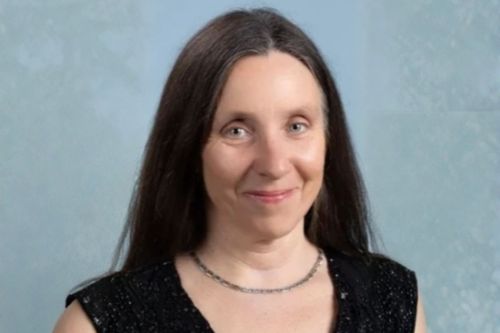
Maris Laan is a Professor of Human Genetics and the Vice-Dean for Research at the Faculty of Medicine, University of Tartu, Estonia. She was trained at the University of Tartu as a geneticist (1992), followed by a PhD at the University of Helsinki, Finland (1997), postdoctoral training at Ludwig-Maximilians-Universität München, Germany (1996-1998), and the Marine Biological Laboratories, Woods Hole, USA (1999-2000). In 2003, she was awarded the Wellcome Trust International Senior Fellowship, and in 2006, the Howard Hughes Medical Institute International Senior Scholarship to build her own research in medical genetics and genomics at her alma mater, the University of Tartu. She is the only scientist in Estonia to have received both prestigious grants. Prof. Laan held a visiting professorship from 2022 to 2023 at the Oregon Health and Science University, Portland, USA.
Prof. Laan’s research focuses on reproductive genetics, spanning fundamental discoveries and translational research in male and female infertility and pregnancy complications, with research findings rapidly translated into clinical practice through close collaboration with clinical partners. While rooted in investigating national cohorts, her research has global relevance, shaping reproductive care and infertility management worldwide and is supported by collaborative networks across Europe and beyond.
In 2021, Prof. Laan was elected to the Estonian Academy of Sciences. She is the founder and the Chairman of the Assembly of Female Academy members. She has served in various roles on national and international research funding bodies, steering groups and advisory committees, and as an associate editor of journals in reproductive medicine.
Prof. Laan received the Estonian National Science Award in Chemistry and Molecular Biology (2010) and became the first woman to be awarded the Baltic Academies of Sciences medal (2018). Her distinctions also include the University of Tartu Grand Medal (2026) and the Baltic Award for Significant Contribution to Science 2026.