The Nobel Prizes are awarded by the Nobel Foundation in Stockholm, Sweden to "those who, during the preceding year, have conferred the greatest benefit to humankind."
It takes place every year and there are five categories: physics, chemistry, physiology or medicine, literature and peace, and the Sveriges Riksbank Prize in Economic Sciences in Memory of Alfred Nobel.
ERC grantees Nobel laureates
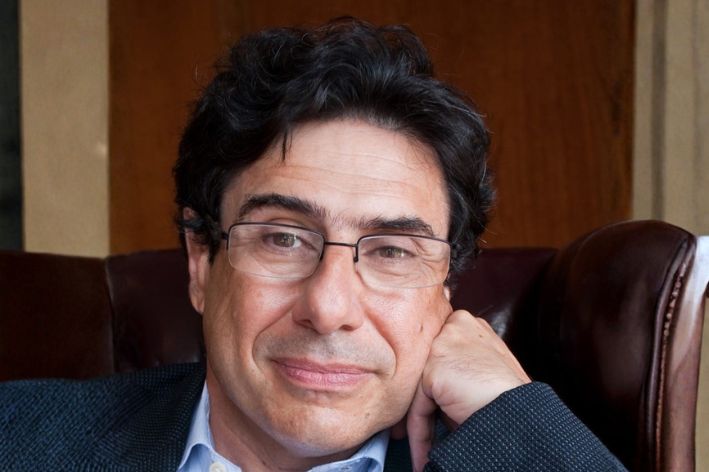
Philippe Aghion - Sveriges Riksbank Prize in Economic Sciences in Memory of Alfred Nobel
Philippe Aghion won the 2025 Sveriges Riksbank Prize in Economic Sciences in Memory of Alfred Nobel together with Joel Mokyr and Peter Howitt 'for having explained innovation-driven economic growth'.
See ERC press release
- More about Philippe Aghion
Philippe Aghion, born in 1956, is a French economist and professor at the Collège de France,atINSEAD,atthe London School of Economics and at the Paris School of Economics.Aghion began his academic career in 1987 when he joined the Massachusetts Institute of Technology (MIT). In 1990, he was appointed Deputy Chief Economist of the European Bank for Reconstruction and Development (EBRD) before moving to the Nuffield College, Oxford, and then University College London in 1996. In 2002, he returned to Harvard where he became the Robert C. Waggoner Professor in Economics, a chair he held until 2015 when he was named Centennial Professor of Economics at the London School of Economics (LSE). He has won two Advanced Grants from the European Research Council.
Ferenc Krausz and Anne L’Huillier - Nobel Prize in Physics, 2023
They won the Nobel Prize in Physics for experimental methods that generate attosecond pulses of light for the study of electron dynamics in matter.
See ERC press release
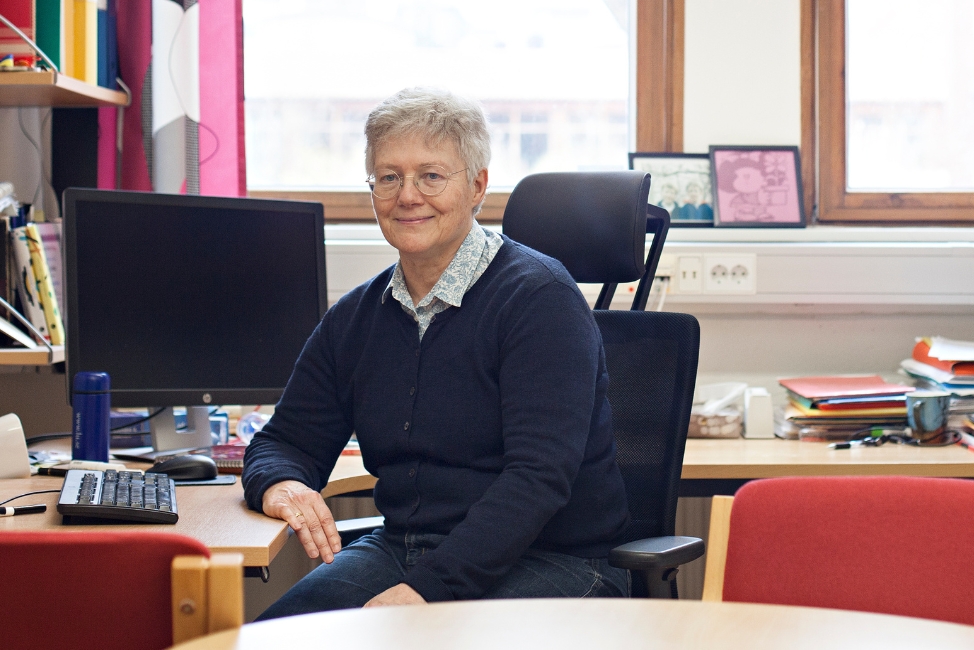
'The European Research Council has provided great support for my research for 15 years, since 2008! It has allowed me to build a research group and purchase the necessary laboratory equipment, with excellent conditions for my research in attosecond science! The possibility to explore innovative ideas towards proof of concept has also been useful.' (Anne L'Huillier)
- More about Anne L'Huillier
Anne L'Huillier, born 1958, is a French-Swedish physicist, and professor of atomic physics at Lund University in Sweden.L'Huillier studied physics and mathematics at the University Pierre et Marie Curie in Paris. Her PhD was in experimental physics at the Commissariat à l'énergie atomique et aux énergies alternatives in Saclay Nuclear Research Centre. As a post-doctoral fellow, she was in Gothenburg, Sweden, and Los Angeles, California, United States. From 1986 to 1995, she was employed at the Saclay Nuclear Research Centre. In 1995 she moved to Lund University, Sweden, becoming professor in 1997. L'Huillier has been a member of the Swedish Academy of Sciences since 2004.
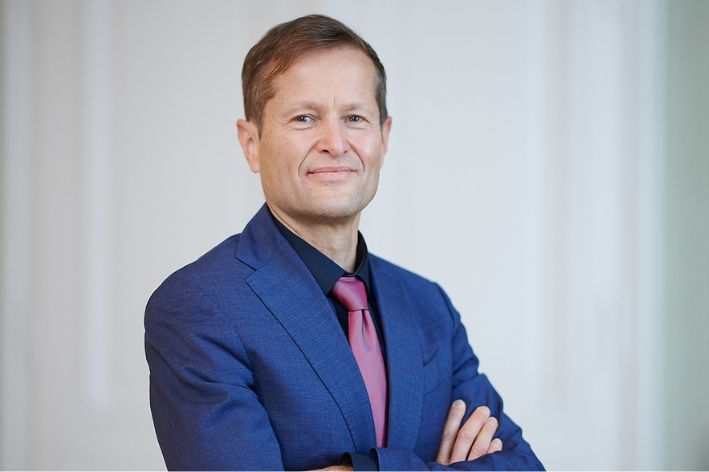
'The recognition of our work with the Nobel Prize is also a tribute to funding institutions specialising in basic science, such as the European Research Council. I wholeheartedly acknowledge the ERC’s role in advancing the frontiers of science. My ERC Advanced Grant provided the flexibility and freedom we needed.' (Ferenc Krausz)
- More about Ferenc Krausz
Ferenc Krausz, born 17 May 1962, is a Hungarian-Austrian physicist, whose research team has generated and measured the first attosecond light pulse and used it for capturing electrons’ motion inside atoms, marking the birth of attophysics.
Krausz studied theoretical physics at Eötvös Loránd University and electrical engineering at the Technical University of Budapest in Hungary. After his habilitation at the Technical University of Vienna, in Austria, he became professor at the same institute. In 2003 he was appointed director at the Max Planck Institute for Quantum Optics in Garching and in 2004 became chair of experimental physics at the Ludwig Maximilians University in Munich. In 2006 he co-founded the Munich-Centre of Advanced Photonics (MAP) and began serving as one of its directors. In 2018, he initiated the Center for Molecular Fingerprinting in Budapest, Hungary, for pursuing the validation of a novel at to second-metrology-based platform for health monitoring.
Svante Pääbo - Nobel Prize in Physiology or Medicine, 2022
He won the Nobel Prize in Physiology or Medicine for his discoveries concerning the genomes of extinct hominins and human evolution.
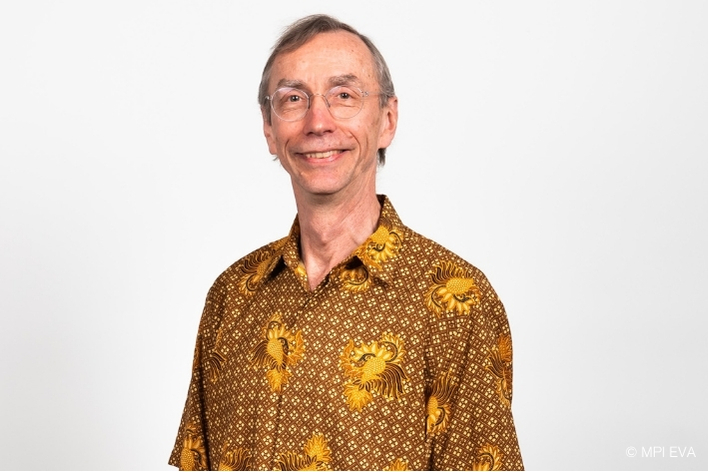
'The ERC’s support for curiosity-driven research is essential for the European research ecosystem that generates new insight, new products and new therapies. It has allowed our research group to pursue new projects for over a decade.'
- More about Svante Pääbo
Svante Pääbo, born 20 April 1955, is a Swedish geneticist and one of the founders of paleogenetics, who has worked extensively on the Neanderthal genome.
Pääbo earned his Ph.D. from Uppsala University in 1986 and from 1986 to 1987, he did postdoctoral research at the Institute for Molecular Biology II, University of Zurich, Switzerland. As an EMBO Postdoctoral Fellow, Pääbo moved to the United States in 1987 at the University of California, Berkeley, where he joined Allan Wilson's lab and worked on the genome of extinct mammals. In 1990, he returned to Europe to become professor of general biology at the University of Munich, and, in 1997, he became founding director of the Max Planck Institute for Evolutionary Anthropology in Leipzig, Germany. In 1997, Pääbo and colleagues reported their successful sequencing of Neanderthal mitochondrial DNA (mtDNA), originating from a specimen found in Feldhofer grotto in the Neander valley. In 2006, Pääbo announced a plan to reconstruct the entire genome of Neanderthals. In 2007, he was named one of Time magazine's 100 most influential people of the year. In 2014, he published the book Neanderthal Man: In Search of Lost Genomes. Recently, Pääbo has studied the physiological consequences of genetic differences between Neanderthals and modern humans. For example, in 2020, he showed that genetic variants contributed by Neandertahlas to present-day people influence how sick you get if you are infected by SARS-CoV-2. As of October 2022, Pääbo has an h-index of 167 according to Google Scholar and of 133 according to Scopus.
Alain Aspect and Anton Zeilinger - Nobel Prize in Physics, 2022
They won the Nobel Prize in Physics for experiments with entangled photons, establishing the violation of Bell inequalities and pioneering quantum information science.
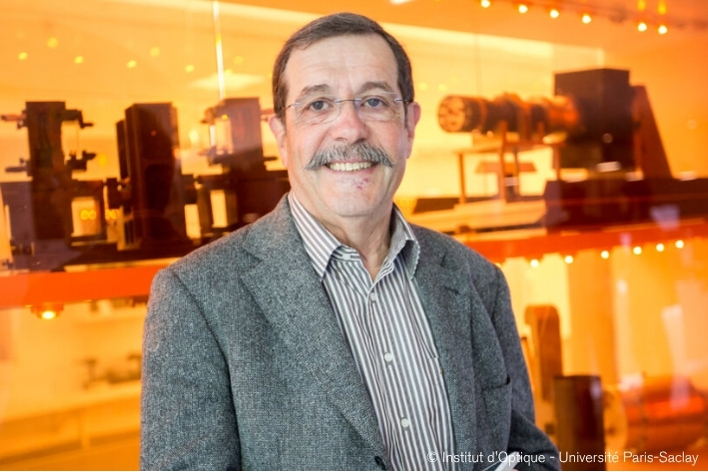
- More about Alain Aspect
Alain Aspect, born 15 June 1947, is a French physicist noted for his experimental work on quantum entanglement.
Aspect is a graduate of the École Normale Supérieure de Cachan (ENS Cachan, today ENS Paris-Saclay). He passed the agrégation in physics in 1969 and received his master degree (thèse de 3ème cycle) in 1971 from the Institut d’Optique (later known as Institut d'Optique Graduate School) of Université d'Orsay (later known as Université Paris-Sud). He then taught for three years in Cameroon as a replacement for then compulsory military service. In the early 1980s, while working on his doctorat d'État (habilitation thesis), he performed the Bell test experiments that showed that Albert Einstein, Boris Podolsky and Nathan Rosen's putative reductio ad absurdum of quantum mechanics, namely that it implied 'ghostly action at a distance', did in fact appear to be realized even when the measurements on two photons were separated by a so-called space-like interval, i.e., could influence each other only by an interaction travelling faster than light (see EPR paradox and Aspect's experiment). He defended his 'doctorat d'État' in 1983 at Institut d’Optique - Université Paris-Sud (today part of Paris-Saclay University). From 1985 to 1992 he worked with Claude Cohen-Tannoudji, Jean Dalibard and Christophe Salomon on laser cooling of atoms (Nobel prize 1997). Aspect received an honorary doctorate from several universities in Europe, Canada, Australia, India. He is a professor at the Institut d’Optique-Université Paris Saclay, and at École Polytechnique-Institut Polytechnique de Paris He is a member of the French Academy of Sciences and French Academy of Technologies, and a foreign member of several academies (Austria, Belgium, Italy, UK, USA). He received many awards, including the CNRS gold medal, the Wolf prize in Physics, the Niels Bohr gold medal, the Albert Einstein medal, the Balzan prize. He is a founder or scientific advisor of several startup companies on quantum technologies (Pasqal, Quandela, QphoX, Welinq).
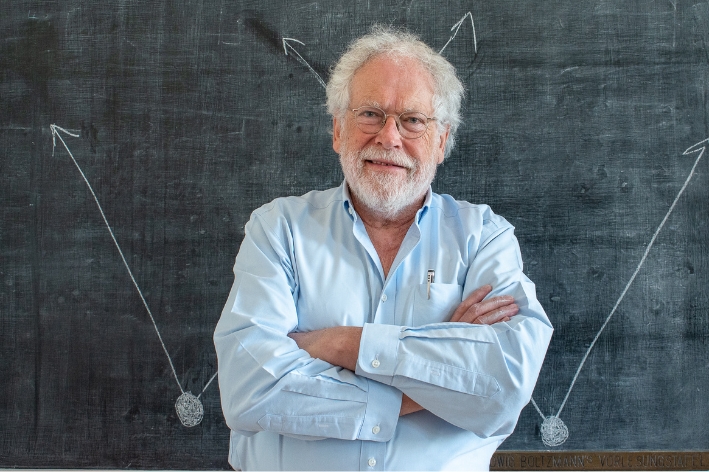
- More about Anton Zeilinger
Anton Zeilinger, born 20 May 1945, is an Austrian quantum physicist working on the fundamental aspects and applications of quantum entanglement.
In the 1970s, Zeilinger worked at the Vienna Atominstitut as a research assistant and associate researcher at the Massachusetts Institute of Technology Neutron Diffraction Laboratory until 1979, when he accepted the position of assistant professor at the same Atominstitut. That year he qualified as a university professor. at the Vienna University of Technology. In 1981 Zeilinger returned to MIT in 1981 as an associate professor on the physics faculty until 1983. Between 1980 and 1990 he worked as a professor at the Vienna University of Technology, the Technical University of Munich, the University of Innsbruck and the University of Vienna. He was also, between 2004 and 2013, the scientific director of the Institute for Quantum Optics and Quantum Information in Vienna between 2004 and 2013. Zeilinger became professor emeritus at the University of Vienna in 2013. He was president of the Austrian Academy of Sciences from 2013 till 2022. Since 2006, Zeilinger is the vice chairman of the board of trustees of the Institute of Science and Technology Austria, an ambitious project initiated by Zeilinger's proposal. In 2009, he founded the International Academy Traunkirchen, which is dedicated to the support of gifted students in science and technology. He is a fan of the Hitchhiker's Guide To The Galaxy by Douglas Adams, going so far as to name his sailboat 42.
Benjamin List - Nobel Prize in Chemistry, 2021
He won the Nobel Prize in Chemistry for the development of asymmetric organocatalysis.
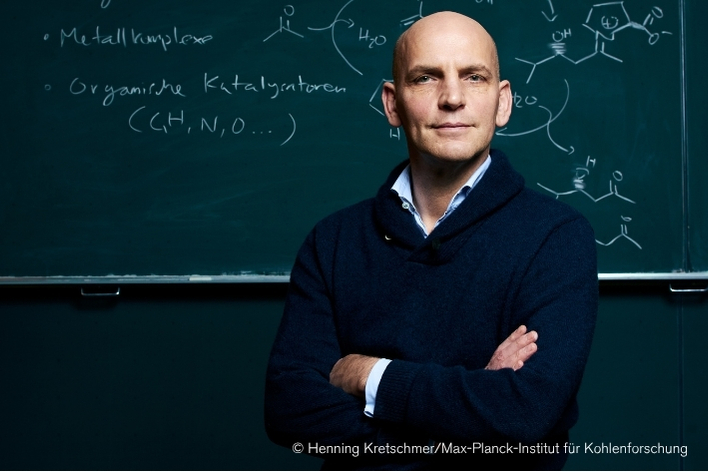
'To gain momentum, every good idea in science needs freedom and confidence. With its trust in my research and its generous funding, the ERC has been an incredible help to ignite the spark of Asymmetric Organocatalysis.'
- More about Benjamin List
Benjamin List, born 11 January 1968, is a German chemist and is considered to be one of the founders of organocatalysis, which uses non-metal and non-enzyme catalysts.
List obtained his Diplom (M.Sc.) degree in chemistry from the Free University of Berlin in 1993, and his PhD from Goethe University Frankfurt in 1997. List worked at the Scripps Research Institute Department of Molecular Biology in La Jolla, US as a postdoctoral researcher in Carlos F. Barbas III and Richard Lerner's research groups from 1997 to 1998 with a scholarship from the Alexander von Humboldt Foundation and as an assistant professor from 1999 to 2003. In 2003 he returned to Germany to become group leader at the Max Planck Institut für Kohlenforschung, and in 2005 he became one of the institute's directors, heading the Homogeneous Catalysis Department. He served as the institute's managing director from 2012 to 2014. He has held a part-time position as an honorary professor of organic chemistry at the University of Cologne since 2004. List is also a principal investigator at the Institute for Chemical Reaction Design and Discovery, Hokkaido University since 2018. He is the editor-in-chief of the scientific journal Synlett. As of 2021, he has an h-index of 95 according to Google Scholar and of 86 according to Scopus.
Giorgio Parisi - Nobel Prize in Physics, 2021
He won the Nobel Prize in Physics for groundbreaking contributions to our understanding of complex physical systems, for the physical modelling of Earth’s climate, quantifying variability and reliably predicting global warming and for the discovery of the interplay of disorder and fluctuations in physical systems from atomic to planetary scales.
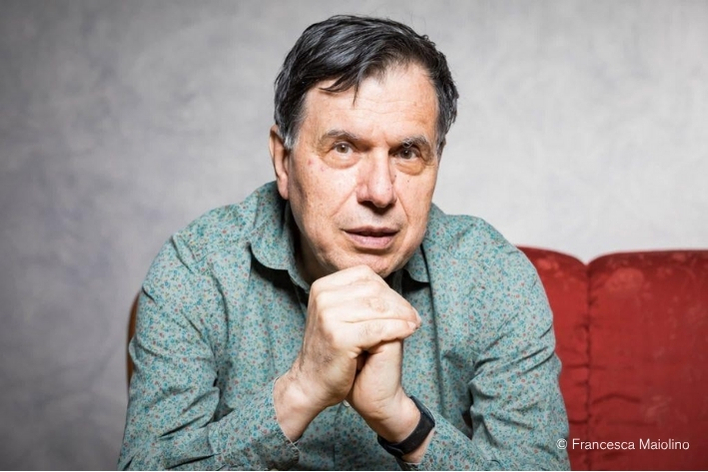
‘’Science is like playing puzzles or reading a detective story and trying to understand who is guilty before the author tells you.”
- More about Giorgio Parisi
Giorgio Parisi, born 4 August 1948, is an Italian theoretical physicist, whose research has focused on quantum field theory, statistical mechanics and complex systems.Parisi received his degree from the University of Rome La Sapienza in 1970 under the supervision of Nicola Cabibbo. He was a researcher at the Laboratori Nazionali di Frascati (1971–1981) and a visiting scientist at the Columbia University (1973–1974), Institut des Hautes Études Scientifiques (1976–1977), and École Normale Supérieure (1977–1978). From 1981 until 1992 he was a full professor of Theoretical Physics at the University of Rome Tor Vergata and he is now professor of Quantum Theories at the Sapienza University of Rome. He is a member of the Simons Collaboration "Cracking the Glass Problem". From 2018 until 2021 he was the president of the Accademia dei Lincei.
Sir Peter J. Ratcliffe - Nobel Prize in Physiology or Medicine, 2019
He won the Nobel Prize in Physiology or Medicine for the discoveries of how cells sense and adapt to oxygen availability.
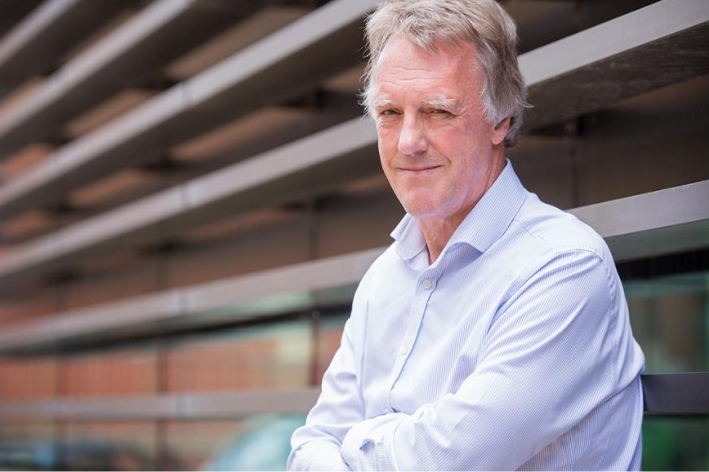
'What we have found out through our simple passion to discover things is the means by which cells sense and respond to low oxygen. We have put knowledge on the table, and we believe it’s secure knowledge.'
- More about Sir Peter John Ratcliffe
Sir Peter John Ratcliffe, born 14 May 1954, is best known for his work on cellular reactions to hypoxia.Ratcliffe won an open scholarship to Gonville and Caius College, University of Cambridge in 1972 to study Medicine and then completed his MB ChB medical degree with distinction at St. Bartholomew's Hospital in 1978. He then trained in renal medicine at the University of Oxford, focusing on renal oxygenation. He earned a higher MD degree from University of Cambridge in 1987. In 1989, Ratcliffe established a laboratory at the University of Oxford’s Nuffield Department of Medicine to explore the regulation of erythropoietin (EPO), a hormone released by the kidneys and responsible for stimulating the production of red blood cells. In 1990, he received a Wellcome Trust Senior Fellowship to study cellular responses to hypoxia. From 1992 to 2004 he was senior research fellow in clinical medicine at Jesus College, Oxford. In 2002, Ratcliffe was elected to the Academy of Medical Sciences and to the Royal Society. He was appointed Nuffield Professor and Head of the Nuffield Department of Clinical Medicine at Oxford in 2004. In 2016 he was appointed Director of Clinical Research at the Francis Crick Institute, retaining a position as member, now Distinguished Scholar, of the Ludwig Institute for Cancer Research, Oxford.
Ben Feringa - Nobel Prize in Chemistry, 2016
He won the Nobel Prize in Chemistry for the design and synthesis of molecular machines.
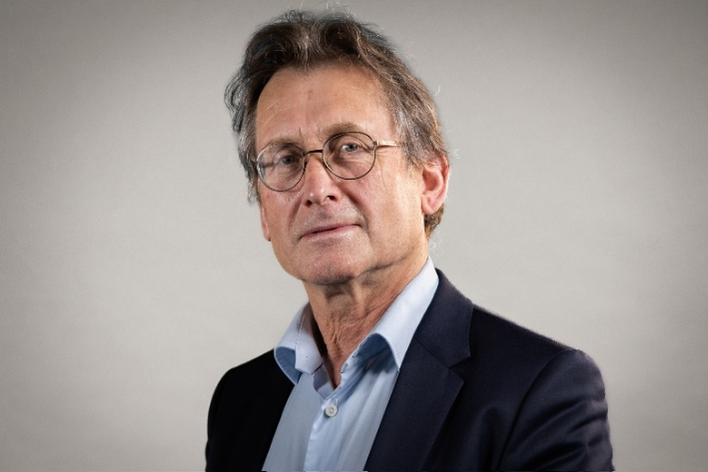
- More about Ben Feringa
He obtained his PhD degree at the University of Groningen in the Netherlands under the guidance of Professor Hans Wynberg. After working as a research scientist at Shell in the Netherlands and at the Shell Biosciences Centre in the UK, he was appointed lecturer and in 1988 full professor at the University of Groningen and named the Jacobus H. van't Hoff Distinguished Professor of Molecular Sciences in 2004. He was elected Foreign Honorary member of the American Academy of Arts and Sciences and is member of the Royal Netherlands Academy of Arts and Sciences. In 2008 he was appointed Academy Professor and was knighted by Her Majesty the Queen of the Netherlands. Feringa's research has been recognized with a number of awards including the Koerber European Science Award (2003), the Spinoza Award (2004), the Prelog gold medal (2005), the Norrish Award of the ACS (2007), the Paracelsus medal (2008), the Chirality medal (2009),the RSC Organic Stereochemistry Award (2011), Humboldt Award (2012), the Grand Prix Scientifique Cino del Duca (French Academy 2012), the Marie Curie medal (2013) and the Nagoya Gold Medal (2013). The research interest includes stereochemistry, organic synthesis, asymmetric catalysis, optopharma, molecular switches and motors, self-assembly and molecular nanosystems.Professor Feringa is currently a member of the ERC Scientific Council
May-Britt Moser and Edvard I. Moser - Nobel Prize in Physiology or Medicine, 2014
They won the Nobel Prize in Physiology or Medicine 2014 for their discoveries of cells that constitute a positioning system in the brain.
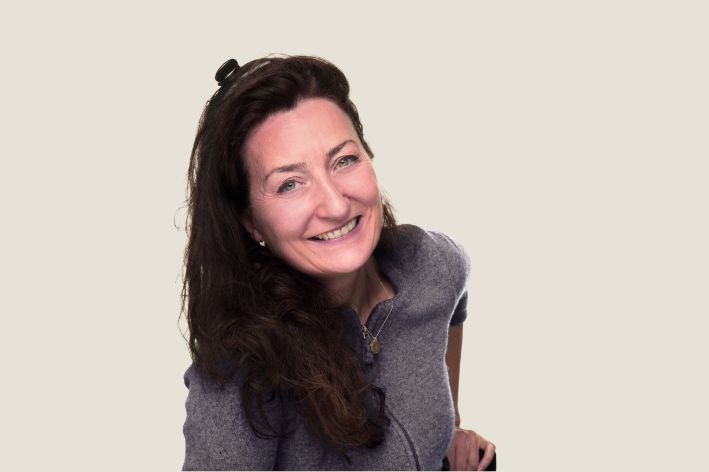
- More about May-Britt Moser
May-Britt Moser is a professor of neuroscience since 2000 (Associate professor from 1996) and Scientific Director of the Centre for Algorithms in the Cortex and Scientific Co-Director of the Kavli Institute for Systems Neuroscience at the Norwegian University of Science and Technology (NTNU) in Trondheim. Her interest is in the neural basis of spatial location and spatial memory as well as cognitive functions more generally. Her work, conducted with Edvard Moser as a long-term collaborator, includes the discovery of grid cells in the entorhinal cortex, border cells, speed cells and object-vector cells, and mechanisms for episodic time. The recent development of Neuropixels probes and 2-photon miniscopes for simultaneous recording of thousands of neurons in freely-moving rats and mice (the latter developed in her lab) helps unravelling how the neural microcircuits are organized and spatial mapping is becoming one of the first non-sensory cognitive functions to be characterized at a mechanistic level in neural networks. Both the psychology degree and PhD training in neuroscience are from the University of Oslo and partly from University of Edinburgh. She has received numerous awards for her work, and together with Edvard Moser and John O’Keefe, she was awarded the Nobel Prize in Physiology or Medicine in 2014.
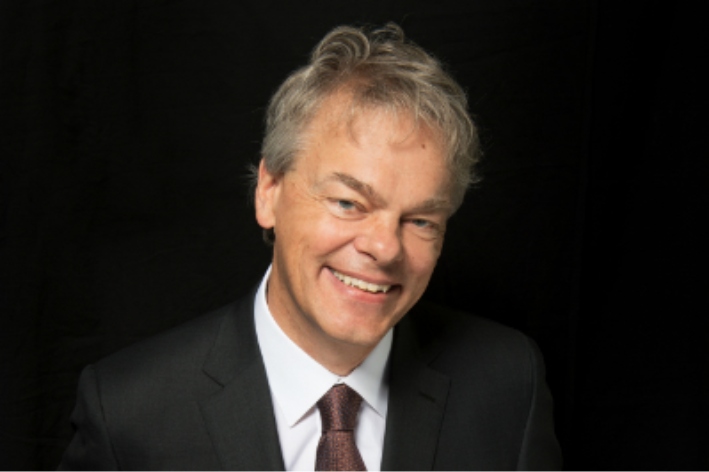
- More about Edvard I. Moser
Edvard Moser is interested in neural network coding in the brain, with emphasis on space, time and memory. His work, conducted in collaboration with May-Britt Moser, includes the discovery of grid cells in the brain’s position system. His current focus is on unravelling the computational mechanisms underlying our perception and use of space and time, with a focus on how these mechanisms emerge from interactions between large numbers of neurons with known functional identity – an endeavour significantly boosted by the development of Neuropixels probes and 2-photon miniscopes for freely-moving rodents, technologies that the Mosers have participated in developing.
Edvard Moser received his initial training at the University of Oslo under the supervision of Per Andersen. He received postdoctoral training in the U.K. with Richard Morris and John O’Keefe. In 1996 he accepted a faculty position at NTNU, where he became a professor in 1998. With May-Britt Moser he founded the Centre for the Biology of Memory in 2002, the Kavli Institute for Systems Neuroscience in 2007, the Centre for Neural Computation in 2013, and the Centre for Algorithms in the Cortex in 2023. The Mosers have received numerous awards, including the 2014 Nobel Prize in Medicine or Physiology.
Jean Tirole - Sveriges Riksbank Prize in Economic Sciences in Memory of Alfred Nobel, 2014
He won the Sveriges Riksbank Prize in Economic Sciences in Memory of Alfred Nobel for his analysis of market power and regulation.
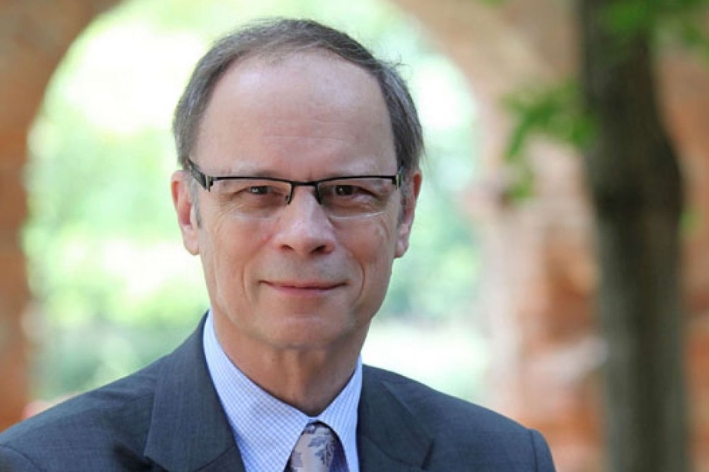
'The beauty of the ERC philosophy is its focus on independence, allowing researchers the freedom to carry out exploratory research without thematic restrictions, leading to true innovations with a positive impact on society.'
- More about Jean Tirole
Jean Tirole, born 9 August 1953, is a French professor of economics at the Toulouse School of Economics (TSE), focusing on industrial organization, the regulation of natural monopolies, game theory, banking and currency crises, and psychology-based economics. He is honorary chairman of the J.J. Laffont - TSE Foundation and of the Institute for Advanced Study in Toulouse (IAST). He has been a member of the Académie des Sciences Morales et Politiques since 2011 and of the Conseil d'Analyse Économique since 1999. He also holds a visiting position at MIT, where he spends six weeks each year.
Tirole first studied sciences, engineering and mathematics for six years (École Polytechnique, École des Ponts et Chaussées and Université Dauphine, all in Paris). He then went on for a PhD in economics at MIT, received in 1981 under the supervision of Eric Maskin, a future Nobel laureate. After 3 years at the École des Ponts, he taught at MIT from 1984 through 1991, and then decided to join Jean-Jacques Laffont to build a leading economics department in Toulouse. This led to the creation of the Institute for Industrial Economics (today TSE-partnership) in 1991, of the Toulouse School of Economics (TSE) in 2007, and of the pluridisciplinary Institute for Advanced Study in Toulouse (IAST) in 2011.
Tirole has published over 200 professional articles in economics and finance, as well as 12 books including The Theory of Industrial Organisation, The Theory of Corporate Finance, Game Theory (with Drew Fudenberg), A Theory of Incentives in Procurement and Regulation (with Jean-Jacques Laffont), The Prudential Regulation of Banks (with Mathias Dewatripont), Competition in Telecommunications (with Jean-Jacques Laffont) and the wide-audience book Economics for the Common Good.
Tirole was president of the Econometric Society in 1998 and of the European Economic Association in 2001. He received Doctorate Honoris Causa from 15 universities around the world and many scientific prizes including the inaugural Yrjö Jahnsson prize of the European Economic Association in 1993, the 2007 CNRS gold medal, the inaugural BBVA award in economics in 2008, and the Nemmers prize in 2014. The Sveriges Riksbank Prize in Economic Sciences in Memory of Alfred Nobel 2014 was awarded to Jean Tirole "for his analysis of market power and regulation".
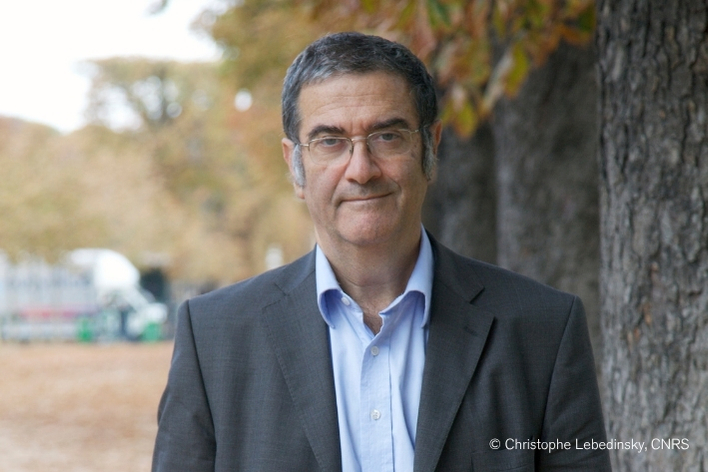
Serge Haroche - Nobel Prize for Physics, 2012
He won the Nobel Prize for Physics for ground-breaking experimental methods that enable measuring and manipulation of individual quantum systems, a study of the particle of light, the photon.
- More about Serge Haroche
Serge Haroche, born 11 September 1944, is a French physicist working primarily in atomic physics and quantum optics.
Haroche worked in the Centre national de la recherche scientifique (CNRS) as a research scientist from 1967 to 1975, and spent a year (1972–1973) as a visiting post-doc in Stanford University, in Arthur Leonard Schawlow's team. In 1975 he moved to a professor position at Paris VI University. Since 2001, Haroche has been a professor at the Collège de France and holds the chair of quantum physics. In September 2012, Serge Haroche was elected by his peers to the position of administrator of the Collège de France. In 2020, Haroche was appointed by former European Commissioner for Innovation, Research, Culture, Education and Youth Mariya Gabriel to serve on an independent search committee for the next president of the European Research Council (ERC), chaired by Helga Nowotny. He is a member of the Société Française de Physique, the European Physical society and a fellow and member of the American Physical Society.
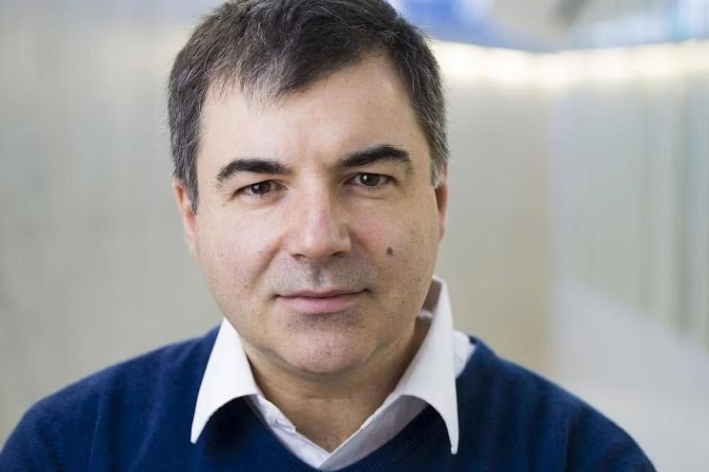
Konstantin Novoselov - Nobel Prize in Physics, 2010
He won the Nobel Prize in Physics for groundbreaking experiments regarding the two-dimensional material graphene.
- More about Konstantin Novoselov
Sir Konstantin Sergeevich Novoselov, born 23 August 1974, is a Russian-British physicist known for revolutionary work on graphene.
Kostya Novoselov participated in the Graphene Flagship project – a €1 billion initiative of the European Commission – and was featured in the official promotion movie of the project. Novoselov was the first Director of the National Graphene Institute and sits on the International Scientific Advisory Committee of Australia's ARC Centre of Excellence in Future Low-Energy Electronics Technologies. Novoselov has published >500 peer-reviewed research papers on several topics including mesoscopic superconductivity (Hall magnetometry) as of June 22, 2018, subatomic movements of magnetic domain walls, the discovery of gecko tape and graphene. In 2014 he was included in the list of the most highly cited researchers. He was also named among the 17 hottest researchers worldwide—"individuals who have published the greatest number of hot papers during 2012–2013". Novoselov joined the National University of Singapore's Centre for Advanced 2D Materials in 2019, making him the first Nobel laureate to join a Singaporean university.