Old grain, new gain

By Vaida Bankauskaite
For thousands of years, millet was a staple food in many parts of the world. Easier to grow than many other crops, it travelled with people as they migrated and settled in new lands, feeding communities across continents. Today, despite its deep history, millet is often overlooked in many parts of Europe, overshadowed by bread wheat, maize and rice, and in some places remembered more as birdseed than as food for people.
Among those helping revive millet’s story, particularly that of broomcorn millet (Panicum miliaceum), one of many millet species, is Giedrė Motuzaitė Matuzevičiūtė. Her fascination with this forgotten grain began with a simple but powerful realisation: sometimes overlooked organisms tell us important things.
In biology, she notes, researchers use model organisms such as zebrafish and fruit flies to understand certain biological phenomena, hoping discoveries made in these organisms provide insight into the workings of others. Motuzaitė Matuzevičiūtė sees a similar opportunity for broomcorn millet. In her view, it is ’agriculture’s equivalent: modest in profile, but full of untapped significance.’
A crop with a biomolecular secret
The history of millets stretches deep into prehistory. Around 20 different millet species were domesticated across Eurasia and Africa, becoming central to many communities long before global agriculture narrowed around a few dominant cereals. In Europe and Asia, broomcorn millet and foxtail millet were especially important. Both were domesticated around 8 000 years ago in present-day northern China.
As Motuzaitė Matuzevičiūtė notes, millets have played an important role because they are resilient to climate change. They mature quickly and tolerate dry conditions. This makes them well-suited to flexible farming systems. For researchers, millets offer a window into the past, particularly into dietary change and environmental adaptation as humans moved from one place to the next.
For a long time, however, millets remained mysterious in archaeological science. Their tiny grains hardly survive in the ground, and even when they do, it can be difficult to determine how they contributed to people’s diets.
That changed with the discovery of a remarkable biochemical marker: miliacin, a pentacyclic triterpene methyl ether and a distinctive biomolecule strongly associated with broomcorn millet species.
As Motuzaitė Matuzevičiūtė explains: ‘Miliacin is released in the environment, and it gets deposited in lacustrine sediments, which allows us to identify broomcorn millet cultivation horizons in the past since its introduction and link it with climatic parameters. You cannot do it with barley; you cannot do it with wheat or with corn or any other crop.’
Reconstructing diets
That single molecule opened new doors. By tracing millet through chemical evidence, researchers can ask questions about where it was grown and how it was used. Broomcorn millet has another scientific advantage: it is a C4 plant, with a distinctive way of photosynthesising. Unlike C3 crops such as wheat and barley, broomcorn millet uses carbon dioxide more efficiently, especially in hot and sunny environments where water is scarce.
Consumption of C4 crops leaves a distinct carbon isotope signature in human and animal tissues, such as bones and teeth. But isotope analysis does not specify which C4 crop was eaten. Maize, for instance, is also a C4 plant. Isotope analysis therefore needs to be combined with archaeobotanical evidence and biomolecular analysis to reconstruct when millet entered diets and how extensively it was used.
As Motuzaitė Matuzevičiūtė explains, broomcorn millet is ’a particularly informative crop for archaeology’ because its scientific properties make it possible to connect food practices with patterns of mobility, exchange and changing subsistence strategies. Miliacin evidence, isotopic analysis, and archaeobotanical remains from broomcorn millet allow researchers to track human migration, animal foddering, and adaptation to drought-prone or climatically unstable environments.
The rise and decline of broomcorn millet
The evidence shows that millet did not spread equally in Europe. Some regions adopted it quickly and integrated it into daily diets, sometimes even becoming a staple food. In other places, people consumed millet only occasionally and often planted it in response to adverse environmental conditions.
Culture also influenced its adaptation. Communities made choices based on their traditions, culinary preferences and farming practices. Whether or not they had contact with neighbouring communities also mattered.
Understanding this uneven spread of millet across Europe is crucial, says Giedrė Motuzaitė Matuzevičiūtė. It challenges the idea that food history is a simple story of progress, in which ‘primitive’ crops were inevitably replaced by ‘better' ones. In many places, people swapped a hardy, nutritious grain for one that needs more water and richer soil.
Millet’s decline in many European regions did not necessarily mean it stopped being useful or nutritious. Instead, other grains became more dominant for economic, political, religious, and cultural reasons. Trade and commercial systems increasingly rewarded the production and sale of other grains, such as bread wheat, rye, barley and eventually maize Millet lost ground as people increasingly favoured foods made from those other cereals. State priorities and later industrial agriculture encouraged standardised crops that could be produced and sold at scale.
This led to less diverse landscapes and diets. Fields that once supported a broader range of cereals became more uniform. Knowledge associated with cultivating and preparing millets began to fade. Crops that had helped sustain communities for millennia were gradually recast as peripheral.
Research on millets, therefore, is not just about reconstructing ancient farming. It also demonstrates that the foods we consider normal or traditional today are not necessarily here to stay.
Millet was an ordinary and important part of people's diets in many places. Later, it became marginal or unfamiliar in some of those same regions. The change was so gradual that people might eventually forget millet had ever played such an important role. The same process can happen to other crops, foods, and cultural practices, showing how fragile agricultural diversity can be. ‘What seems timeless in one era can become invisible in the next, says Motuzaitė Matuzevičiūtė.
Reviving the ancient grain
Millet’s story shows that what we eat is shaped not only by what grows or tastes best, but also by economics, politics, cultural preferences, and agricultural systems. When those systems favour fewer crops, we risk losing both biodiversity and the knowledge that goes with it.
Motuzaitė Matuzevičiūtė sees good reasons to revive interest in millet but recognises that science alone will not be enough. Gathering evidence of the crop’s historical importance and resilience may be a starting point, but agricultural change requires new policies and public imagination.
Yet in a world facing climate change, millets may fit well within strategies to promote sustainable farming and greater biodiversity. ‘Millets can contribute to diversification strategies that reduce dependence on a handful of vulnerable crops’, says Motuzaitė Matuzevičiūtė. ’About 75% of the crops we used 100 years ago, including different species and varieties within the same species, have been forgotten.’
Looking back may well help to move forward. Broomcorn millet was the only millet species able to grow at northern latitudes as high as 60°N. With rising temperatures, this crop holds considerable potential for Nordic farming. For millennia, millets fed people because they could survive uncertainty. Rediscovering their potential may help us confront the uncertainties ahead.
Biography
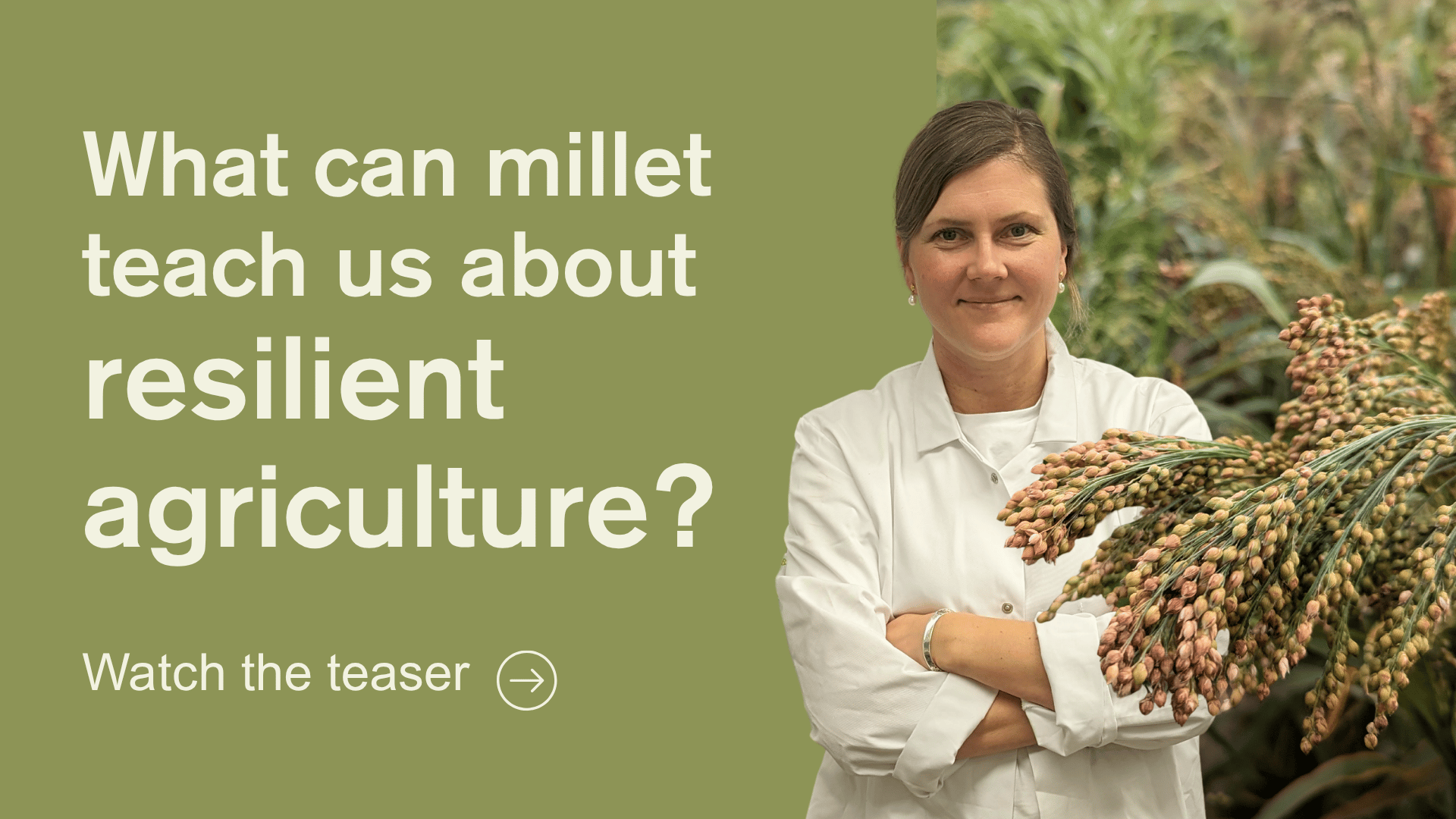
Giedrė Motuzaitė Matuzevičiūtė Keen is Professor of Archaeology and Head of the Bioarchaeology Research Centre at Vilnius University's Faculty of History. She studied archaeology at Vilnius University and the University of Cambridge (MPhil, PhD). Her research uses millet as a model crop to understand how new foods were incorporated into past diets and what drove the spread of crops across Eurasia. Combining archaeobotanical analysis, radiocarbon dating, stable isotope analysis and biomolecular methods, she reconstructs past foodways and draws lessons for future food security. In 2023, she became Lithuania's first ERC Consolidator Grant recipient for the project MILWAYS (Past and Future Millet Foodways).
Project information