
Tags

Displaying 2021 - 2030 of 2748

Towards next generation e-voting

Providing new directions in the field of security, Dr. Feng Hao’s project aims to devise a secure and publicly verifiable system of e-voting - a “self enforcing e-voting system” - which does not rely on vote-tallying authorities. Awarded an ERC…
Providing new directions in the field of security, Dr. Feng Hao’s project aims to devise a secure and publicly verifiable system of e-voting - a “self enforcing e-voting system” -…
Providing new directions in the field of security, Dr. Feng Hao’s project aims to devise a secure and publicly verifiable system of e-voting - a …
Providing new directions in the field of security, Dr. Feng Hao’s project aims to devise a secure and publicly verifiable system of e-voting - a “self enforcing e-voting…
Providing new directions in the field of security, Dr. Feng Hao’s project aims to devise a secure and publicly verifiable…
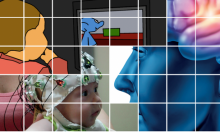
What does our brain say about our social nature?

Understanding our social nature
What does our brain say about our social nature?
Cognitive psychology
The ERC has put together this collection of ERC projects to give a taste of the breadth and depth of some of its funded research in cognitive psychology. You’ll read about: the acquisition of language in infants; the underlying mechanisms of reading; the way our brain computes numbers; the cognitive and neural substrate of social interactions or the influence of social context on our perception of the world.

Marine algae reveal close link between past climate and CO2

The ocean is filled with microscopic algae that take up carbon dioxide (CO2) from the atmosphere in order to grow. A new study by researchers from the Geology Department at the University of Oviedo (Spain) shows that the algae may adapt to rising…
The ocean is filled with microscopic algae that take up carbon dioxide (CO2) from the atmosphere in order to grow. A new study by researchers from the Geology Department at the…
The ocean is filled with microscopic algae that take up carbon dioxide (CO2) from the atmosphere in order to grow. A new study by researchers from…
The ocean is filled with microscopic algae that take up carbon dioxide (CO2) from the atmosphere in order to grow. A new study by researchers from the Geology Department at…
The ocean is filled with microscopic algae that take up carbon dioxide (CO2) from the atmosphere in order to grow. A new…

Highlight: ERC brainstorms ideas to tie academia to industry at the Alpbach Technology Forum

Sponge enzymes: nature’s little bio-builders

Sponges seem an unlikely source for innovation, yet they may hold the key to new nanotechnologies, innovative optical devices and new ways of regrowing human bone and preventing bone disease. Difficult to believe? Not for Werner E.G. Müller. In the…
Sponges seem an unlikely source for innovation, yet they may hold the key to new nanotechnologies, innovative optical devices and new ways of regrowing human bone and preventing bone…
Sponges seem an unlikely source for innovation, yet they may hold the key to new nanotechnologies, innovative optical devices and new ways of…
Sponges seem an unlikely source for innovation, yet they may hold the key to new nanotechnologies, innovative optical devices and new ways of regrowing human bone and…
Sponges seem an unlikely source for innovation, yet they may hold the key to new nanotechnologies, innovative optical…

Full List Starting Grants 2013 - All domains by country

List Starting grants 2013 - Physical Sciences and Engineering

List Starting grants 2013 - Life Sciences

Statistics